Animal Advocacy Africa’s 2025 Review and Strategic Priorities for 2025/26
By AnimalAdvocacyAfrica @ 2025-12-02T07:34 (+37)
Note:
After successful registration as a 501(c)(3) charitable organisation in the U.S., we are shifting our review cycles to align with our fiscal years, running from Oct to Sep. A full review of 2024 was completed in December 2024 - this review covers a 9-month period until Sep 2025. Future reviews will revert back to 12-month periods, covering Oct to Sep.
Summary
This post summarises Animal Advocacy Africa’s work in the first nine months of 2025 and outlines our plans for the fiscal year 2025/26. Our commitment to knowledge sharing and transparency is central to our work. We aim to provide stakeholders and funders with a clear understanding of our strategic decisions, progress, and challenges.
For the benefit of casual readers and those interested in specific aspects of our work, key information and links to relevant sections are provided in this summary.
- Our purpose:
We aim to prevent the spread of industrial animal agriculture in Africa and address its existing harms by building an effective, resilient, and well-resourced farmed animal advocacy movement. - Our work in 2025:
- Training programme:
We ran our second training program cohort (with 406 applications, up 40% from the first cohort), organised our first in-person alumni retreat, launched the Catalyst Fund, incubated three new farmed animal advocacy initiatives across Zambia, Nigeria, and Ghana, supported the launch of several alumni-led initiatives, and achieved a conservatively estimated impact value of $568K (a 1.5x-2.4x multiplier against programme costs). - Beyond the training programme:
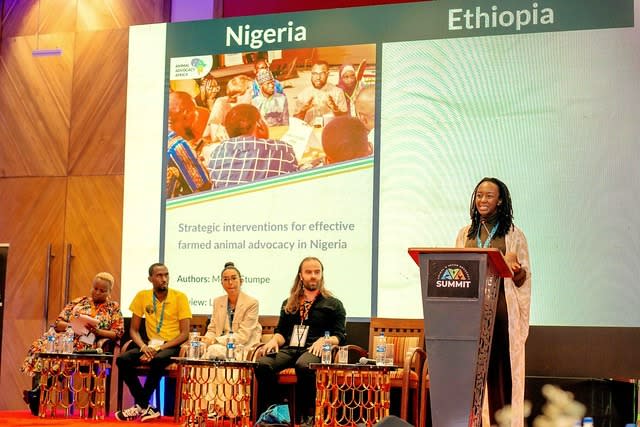
We provided strategic support across the African farmed animal advocacy movement, including playing a key role in the first AVA Summit in Africa, advising on $100K+ in funding decisions, publishing research on interventions in Nigeria, and facilitating connections that helped various organisations recruit African participants and advocates.
- Training programme:
- Our organisation:
We spent ~$227K (including ~$135K in regrants), received ~$189K in donations (mostly from large individual donors), and secured a major $440K grant from Coefficient Giving for 2026 and 2027, while undergoing significant leadership transitions with our co-founder Lynn Tan stepping down and Moritz Stumpe becoming Executive Director. - Our mistakes and key areas for improvement:
We identified challenges around co-founder alignment, follow-up funding for incubated projects, hiring delays, research process gaps, and operations — and have begun implementing improvements. - Our plans for 2025/26:
We will pilot new programmes (a self-guided course, career advising, a country-specific fellowship starting with Nigeria, a strategy forum), adopt a more selective approach to incubation, strengthen research, support alumni, and expand our team capacity. - How you can help:
You can support our mission by donating, partnering with us, connecting us to talent or funders, offering feedback, or engaging with our work through our channels.
Our purpose
Animal Advocacy Africa (AAA) aims to prevent the spread of industrial animal agriculture in Africa and address its existing harms. We plan to do this by building an effective, resilient, and well-resourced farmed animal advocacy movement in Africa. Our strategy is not only to strengthen locally led advocacy and support high-impact interventions, but also to build systemic influence by expanding the political, financial, and human capital of the animal advocacy movement.
For more on why this cause is important, please refer to our post on the rise of animal farming in Africa and our presentation at the Conference on Animal Rights in Europe (CARE).
Our work in 2025
As explained in our 2024 review, our training programme for individual advocates remained our main focus for 2025. Further activities (beyond our training programme) are summarised briefly.
Training programme
What we did
2024/25 cohort
From November 2024 to April 2025, we ran the second edition of our training programme, beginning with a seven‑week Fundamentals programme followed by a nine‑week Advanced programme.
- The number of applications for our programme increased from 293 to 406 between the first and second cohort (almost +40%).
- We accepted 19 applicants into Fundamentals, with 18 completing it. 10 of these were invited to join the Advanced programme, all of whom completed it.
- Surveys and internal reflection indicate that the programme ran smoothly, with clearer planning, stronger participant engagement, and higher satisfaction compared to the previous cohort. One-on-one support from the AAA team was rated as the most valuable component by participants.
- We still identified several areas for improvement, including co‑founder matching, participant timelines, and workload predictability.
Alumni engagement and retreat
Throughout the year, we supported alumni from our first and second cohorts through ongoing 1‑1 support, Slack discussions, and resource sharing. Several collaborations emerged between alumni across cohorts (reported below), contributing to a growing community of practice.
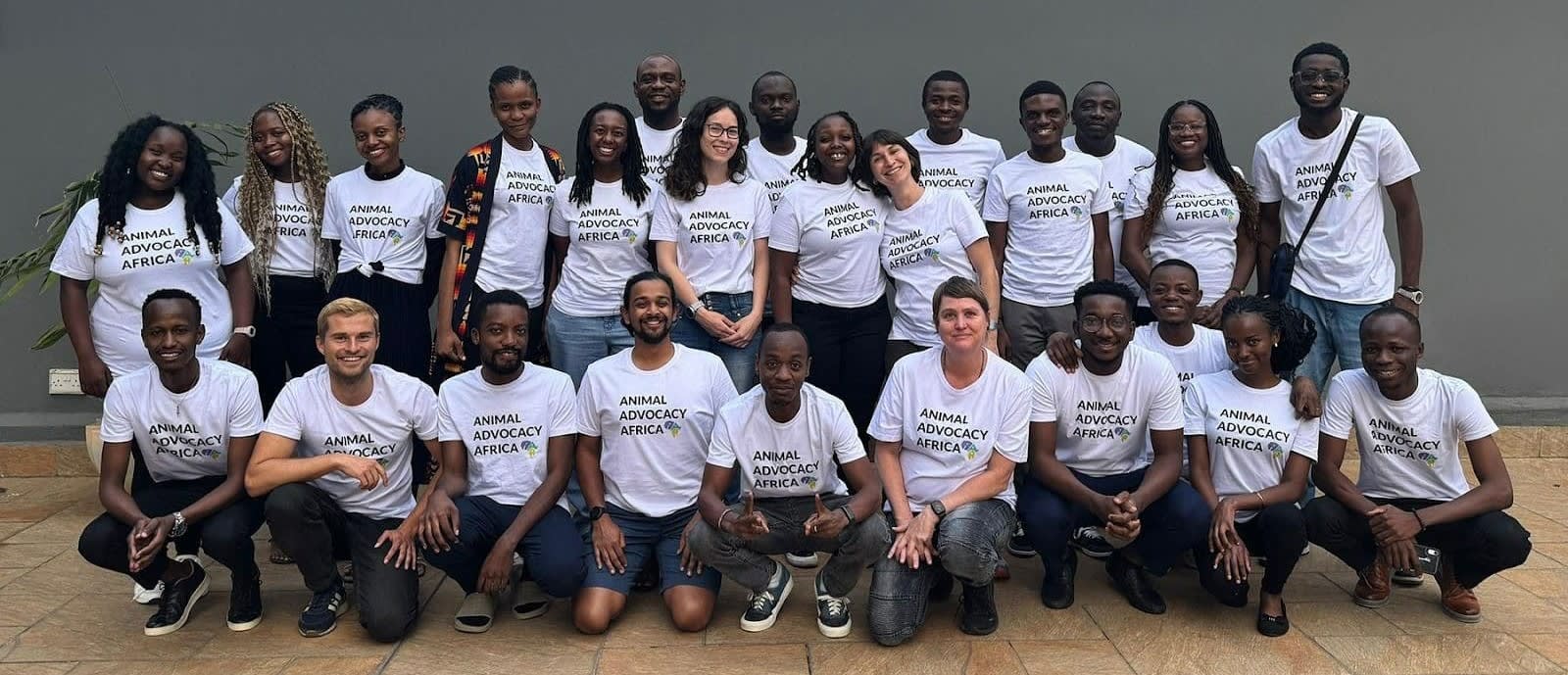
We organised our first in‑person alumni retreat in July, right after the first AVA Africa Summit in Nairobi, bringing together 24 alumni, three external experts, and the AAA team for three days of collaboration. Participants reported notable improvements in meaningful connections and clarity of next steps. The retreat also catalysed the creation of the Effective Animal Researchers Network (EARN) Africa (more on this below).
AAA Catalyst Fund
We launched the AAA Catalyst Fund to provide seed and growth funding to high‑potential projects and organisations. Grants are provided to initiatives we have worked with closely (i.e. primarily our incubated projects) and that we consider well‑positioned for impactful implementation.
What happened as a result
This section reports on key 2025 outcomes achieved by both our 2023/24 and 2024/25 cohorts, focusing on the most important achievements for the sake of brevity. Many of our alumni are taking significant steps in their animal advocacy careers (such as developing new project proposals, publishing research, expanding their professional networks, and contributing to Effective Altruism and animal advocacy initiatives across Africa). Although these outcomes are not all captured in this review and through Importance- and Counterfactual-Adjusted Placements (ICAPs) calculations, they reflect continued strengthening of the farmed animal advocacy movement. We will report on further major outcomes in future reviews once they’ve materialised.
Newly incubated organisations
We incubated the following new projects from our programme in 2025. Below we describe the progress they’ve made until September 2025.
- Lumera (Zambia, Mbamu Chama) – Lumera is the first farmed animal advocacy organisation of its kind in Zambia. During their six‑month pilot, the team secured the country’s first conditional cage‑free commitment from a national restaurant chain using an estimated 100,000-150,000 eggs per year across all branches[1], with four additional companies in late-stage discussions. Lumera also became an official partner of the Poultry Association of Zambia, launched the country’s first welfare‑focused farmer award, and signed MoUs with leading institutions including the University of Zambia and the CSR Network of Zambia.
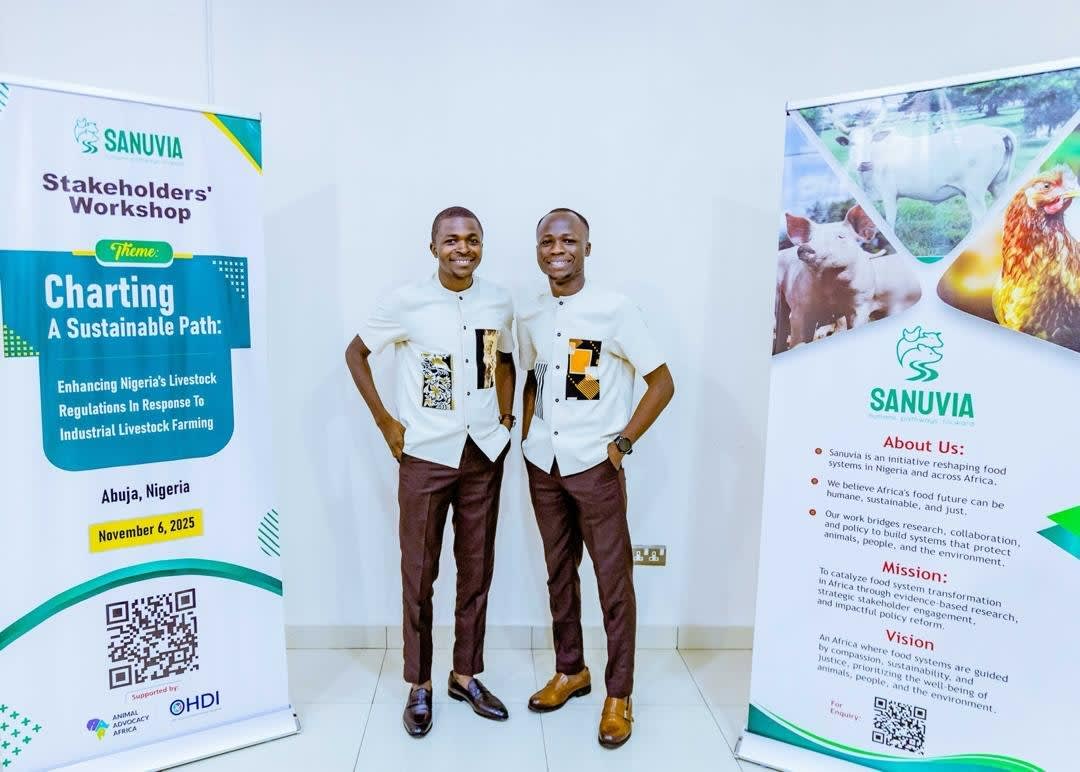
- Sanuvia (Nigeria, Daniel Ayinde & Isaac Fasipe Babatunde) – Sanuvia was founded in response to JBS’s planned USD 2.5 billion expansion into Nigeria, which would involve the slaughter of an estimated 150–200 million animals annually. The team completed early-stage desk research, mapped the regulatory landscape, and conducted interviews with a wide range of stakeholders, including the Veterinary Council of Nigeria, Commercial Dairy Ranchers Association of Nigeria (CODARAN), Livestock247, producer associations, government agencies, and civil‑society actors. They began laying the groundwork for a multi‑stakeholder workshop to co‑develop effective policy responses and have secured their first external funding to support these efforts.
- AWASH (Ghana, Naveeth Basheer) – AWASH focuses on improving welfare standards in Ghana’s fast‑growing tilapia farming sector. With the official launch set for October 2025, the project operates under SHARED’s fiscal sponsorship (more on SHARED below). Founder Naveeth Basheer has relocated from the UK to Ghana to start this project and will receive local support from SHARED’s founder and AAA alumnus Emmanuel Awuni as well as a local aquaculture specialist that they recently hired. AWASH’s first months of operation will focus on initial scoping visits to major farms, which will inform the most promising intervention to test during their pilot.
Other new initiatives enabled by AAA
Beyond the initiatives we incubated through our programme, the following new projects are also a direct result of our work. They reflect the broader ripple effects of our programme, where alumni and participants go on to build new projects, secure funding, and strengthen the farmed animal advocacy movement across Africa.
- EAAN – Initially catalysed at the Effective Altruism (EA) Nigeria Summit 2024 and now co‑led by alumnus Sunday Agbonika, Effective Animal Advocacy Nigeria (EAAN) received their first external grant (USD 11.5K) early this year from the EA Animal Welfare Fund to run their first 12‑month programme cycle, including an Intro Fellowship, meetups, and workshops.
- Dennis Bahati’s Nakuru Chicken Welfare Project – Developed from a proposal Dennis created during our programme, this project is now moving into implementation through an Animal Charity Evaluators (ACE) Movement Grant. Through his role at the Africa Network for Animal Welfare (ANAW) and in collaboration with the Nakuru County Department of Veterinary Services, this initiative aims to develop chicken welfare standards for the Nakuru Animal Welfare Act, with farm assessments and farmer education already underway across all 11 sub‑counties.
- EARN Africa – Developed during our alumni retreat, Effective Animal Researchers Network (EARN) Africa is the first continent‑wide network to strengthen research capacity and coordination. Led by alumni Estelle Florens and Emmanuel Awuni, the network aims to support collaboration, share research expertise, and raise the quality and visibility of animal advocacy research across Africa.
- Decarbonize Initiative – Co-founded by alumna Nduta Muhindi, Decarbonize Initiative has a broad sustainability focus that also drives change for farmed animals. In September 2025 they partnered with The Planted Society to implement the Eat for Impact campaign in Nairobi, working with restaurants across the city to promote climate-friendly dining. 13 restaurants participated – the highest number among all cities involved.
Further alumni roles and achievements
Beyond the new projects emerging from our programme, several alumni have moved into new professional roles or been promoted within their current positions:
- Corazon Nyambura joined Nuru Animal Welfare Organization (Kenya) as Program Officer.
- Marybeth Ubanwa was promoted to Research Manager at Tailored Food, taking on expanded responsibility after previously working as a Research Assistant.
- Gathoni Ireri and Kalori Wesonga joined AAA as part‑time researchers, contributing to our research on Ethiopia and impactful career paths respectively (more on this below).
Updates on previously incubated projects
Two of our three previously incubated organisations continued to make meaningful progress in 2025. These projects are now entering more advanced stages of implementation, engagement, and policy influence.
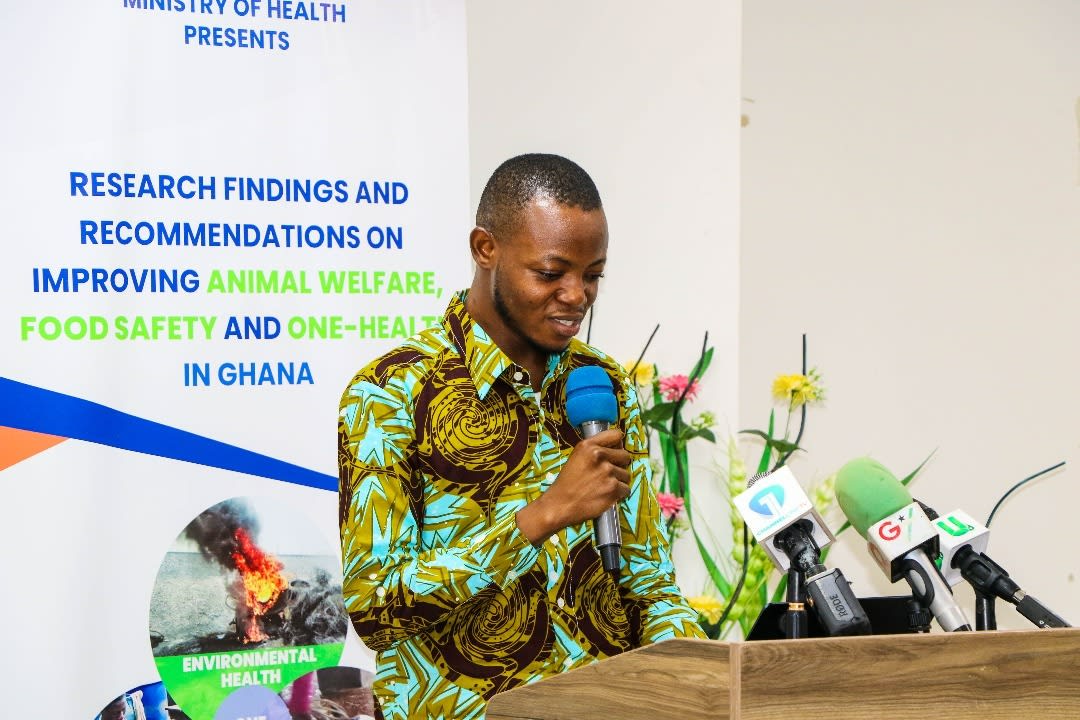
- SHARED (Ghana, Emmanuel Awuni) – SHARED has significantly advanced national pre‑slaughter stunning regulations through collaboration with Ghana’s Ministry of Health and other key agencies. After hosting a major stakeholder workshop in January, a formal committee was established to draft regulations covering humane handling and stunning for cattle, pigs, small ruminants, and poultry. SHARED is now coordinating technical reviews, drafting processes, and inter‑agency consultations supported by an ACE Movement Grant.
- SSI (Uganda, Geofrey Junior Waako) – Building on its successful pilot, SSI has completed draft welfare guidelines for chickens and fish through a series of three stakeholder workshops, made possible by ongoing financial support from the EA Animal Welfare Fund. The organisation has secured MoUs and participation agreements with the Ministry of Agriculture, Animal Industry and Fisheries (MAAIF), Uganda National Bureau of Standards (UNBS), National Environment Management Authority of Uganda (NEMA), and other national bodies. The draft guidelines are currently undergoing internal review across government agencies, with SSI coordinating feedback consolidation and preparing the documents for subsequent legal and technical review.
- Aquatic Futures Africa (Uganda, Njalira Kassim Rashid & Sylvia Nanfuka Kirumira) – AFA discontinued operations due to co-founder differences. We reflect further on our mistakes and learnings below.
Quantified Impact: ICAPs and Monetary Value
As we did in our previous review, we use ICAPs as our primary quantitative metric to measure our impact. Readers unfamiliar with ICAPs or seeking a deeper explanation can refer to that review, where we provide a more detailed overview as well as a breakdown of last year’s costs, assumptions, and multiplier calculations. Our previous review also included more information on limitations, which apply in the same way to this year's estimates.
Our ICAP estimate increased from 4.2 to 7.3, corresponding to a rise in estimated value from $126K to $219K. Applying the 3x multiplier for founder roles — consistent with last year’s approach — our total estimated value creation reaches $568K.
As before, this estimate remains conservative. It excludes some alumni‑founded projects and organisations that are still in early development, volunteer‑led initiatives, alumni leading EA chapters, and a wide range of strategic support and ecosystem services we provide that do not translate into ICAPs (more on this in the following section).
We roughly estimate programme expenses between July 2023 to September 2025 (for our two cohorts) at $240K. These cost allocations to our training programme are approximate and err on the side of being too high to avoid overstating our cost-effectiveness.[2] This yields a multiplier of approximately 2.4x when comparing value created to core programme expenditure. Adding seed grants to incubated organisations (~$129.5K) results in total costs of $369.5K, yielding a multiplier of ~1.5x.
Beyond the training programme
Outside of our training programme, we continue to support the broader farmed animal advocacy movement in Africa and globally. This remains an adjacent area of our work, beyond our core focus on structured programmes and support for participants and alumni. We summarise the most important and interesting outcomes below:
1. Direct, ad-hoc support to African or international actors where AAA can add significant value. This includes feedback on strategic proposals, advice for funders, making strategic connections, and other services.
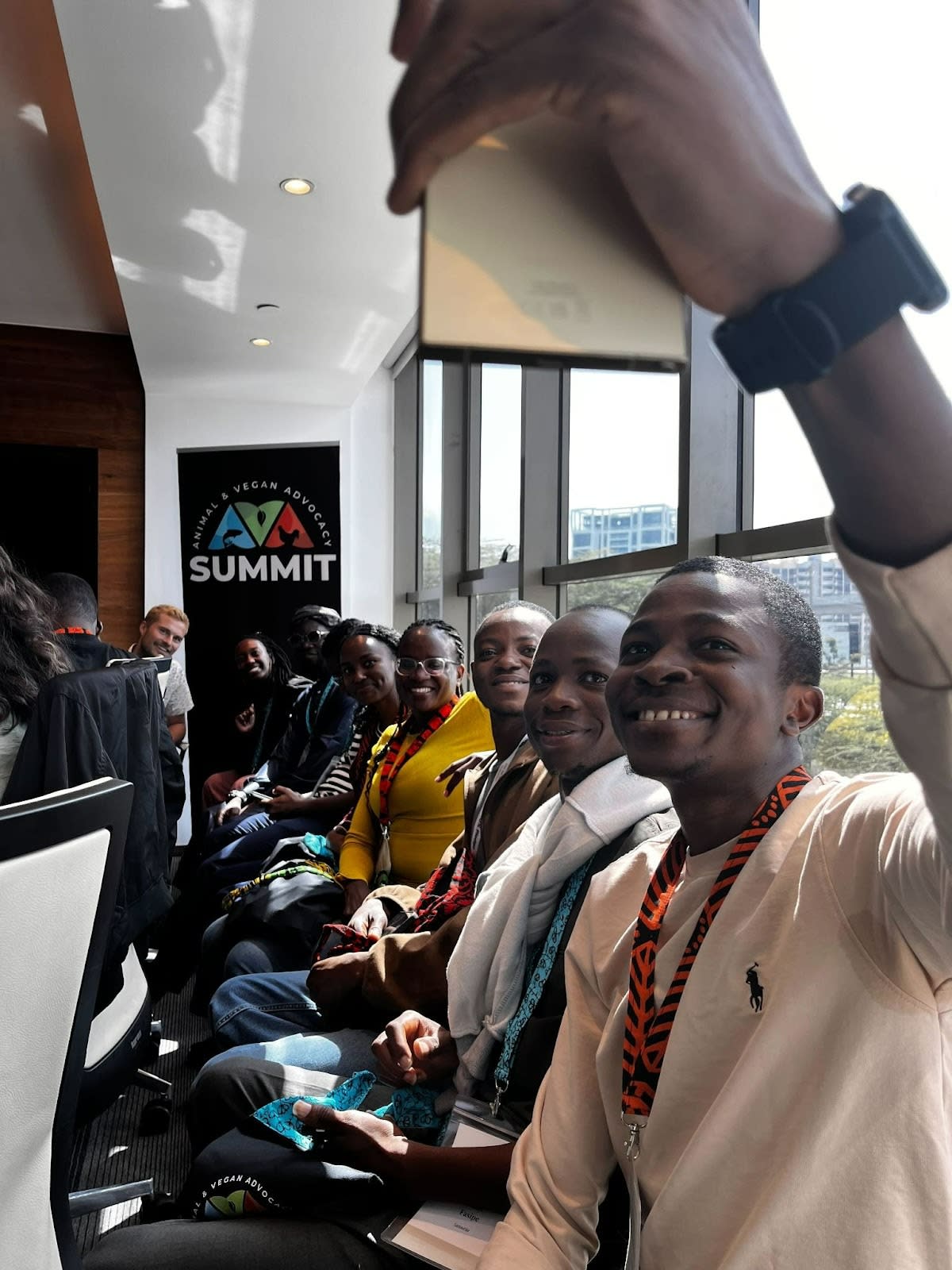
- We played a key role as part of the AVA Advisory Committee in making the first AVA Summit in Africa happen! While our counterfactual impact on this event is hard to estimate, the Summit was a major milestone for the African farmed animal movement and will drive strong momentum and attention to our cause. We look forward to the next edition in Accra in 2026 and will continue to serve on the Advisory Committee.
- We advised funders and donors on grants and other financial support totalling hundreds of thousands USD. Our influence on funders’ decision-making was more significant in some cases than others. We estimate we had a significant impact on roughly $106K in donations and travel awards, while our impact on other grants is less certain.
- Through connections to our alumni community, Felix Nwose learned about ACX grants and later secured a $10K grant for his fish welfare project in Nigeria.
- We supported Animal Ask with connections and advice for their upcoming Kenya research report. Our role was minor and primarily facilitative.
- We helped Hive recruit African participants for their regional advisory panels. They estimate that around 1/4 of their African panelists were a direct result of our outreach support and another 1/2 were an indirect result of our previous community building and connection work.
- We advised a member of the German Green political party on a motion to hinder industrial animal agriculture internationally. The motion was unsuccessful, but the topic gained significant attention within the party.
- We helped Kickstarting for Good to recruit African applicants to their programme. While none were selected for the programme, some were identified as top talent and may be followed up on in the future.
2. Outreach and research to strengthen the effective farmed animal advocacy movement in Africa and improve information access and transparency.
- We published a major research report on strategic interventions for effective farmed animal advocacy in Nigeria.
- In addition, we worked on two research projects that will be published after Sep 2025, each led by our alumni: intervention prioritisation for Ethiopia as one of our priority countries (Gathoni Ireri) and career paths to effectively help farmed animals in Africa (Kalori Wesonga).
- Our staff attended four conferences and gave talks at the AVA Africa and EA South Africa Summits. Our alumnus Isaac Fasipe Babatunde presented our work and shared his experience with our programme at EAGx Nigeria.
- For the sake of brevity, we are not reporting about other outreach work (e.g., newsletters, website, LinkedIn) in this review.
While our exact impact can be hard to measure in this area of work, we think it’s important we spend some portion of our time supporting others in the movement and contributing to broader movement building work. To illustrate the kind of impact this work can have, here is a quote from one of the people we helped — Heather Siekkinen, who we connected to a variety of African advocates for a chapter about animal welfare work in the Global South she was working on:
“Without you, I wouldn't have met most if not all of these incredible people. This is going to provide incredible content for the chapter [I’m writing], which will be read by academics and people interested in Critical Animal Studies, reaching a wider audience than those of us already in the movement."
Our organisation
Budget and financial information
Our expenses for the 9-month period reported on in the review were ~$227K. This includes re-grants of ~$135K, a significant increase from 2024, in line with a stronger role we played in this area and an increasing number of projects we incubated. The expenses for our own operations and programmes (incl. staff salaries, stipends for our participants, travel, subscriptions, etc.) were ~$92K, relatively similar to last year.
During this 9-month period, we received donations and grants totalling ~$189K. Large individual donors made up a significant proportion of this revenue, including six donations of at least $10K each, totalling more than $170K — most of it for regranting.
A significant influx of large individual donations meant we did not need to pursue funding from institutional sources (such as ACE or the EA AW Fund) as aggressively. Though we are happy to report that we secured a $440K grant from Coefficient Giving (formerly Open Philanthropy) for 2026 and 2027. This is a major achievement for our organisation and stabilises our runway for the coming years, allowing us to focus more strongly on executing our strategy and maximising our impact.
We extend our deepest gratitude to our donors and funders, whose generous contributions continue to drive our mission forward. Your support is invaluable to our efforts in improving farmed animal welfare across Africa.
Our staff and operations
We received official confirmation of our status as a 501(c)(3) in the United States in late 2024. In line with this development, we made substantial improvements to our internal processes and operations in 2025 and will continue to do so in 2025/26 to ensure compliance and position our organisation for long term stability and success.
This year also saw significant shifts in our leadership and staffing. Our co-founders, Cameron King and Lynn Tan, transitioned out of their executive roles in early 2025 and at the end of May 2025, respectively. They both remain involved, continuing to serve as board members.
Leadership responsibilities have been successfully transferred to long-term staff, with Moritz Stumpe, our former Programme & Research Manager, stepping up as the new Executive Director. To ensure our capacity was maintained and expanded, we brought on two new staff members and engaged two of our alumni for our research throughout the year.
Our mistakes and key areas for improvement
There are several ways in which we could have done better in 2025. Here are the most important aspects:
- Co-founder alignment challenges in one of our incubated projects:
Aquatic Futures Africa discontinued operations due to co-founder differences. This experience highlighted the importance of more rigorous co-founder matching and alignment processes. We are now helping both co-founders identify new impactful paths and are applying these learnings to future incubation-style support. - Funding gaps for alumni after completing pilot projects:
SHARED faced difficulties securing follow-up funding after completing their initial pilot project and transitioning from AAA seed funding to external fundraising. We provided interim support to bridge their funding gap, but we recognise the need to plan more proactively for this "valley of death" stage and support a smoother transition for high-potential alumni projects. Fortunately, SHARED was able to secure an ACE Movement Grant shortly after our intermediate funding and was able to sustain momentum after a short period of uncertainty. - Hiring delays and limited capacity during recruitment:
Our hiring process for two new permanent staff took significantly longer than intended, causing inconveniences on the side of some applicants. This was largely due to limited internal capacity during a year of major transitions and in-person events, combined with rolling applications that created long waiting times for early applicants. While we were able to hire two strong candidates in the end, we aim to provide a smoother experience for applicants in the future. - Gaps in our research process and agenda:
While our research outputs continued to inform our programmes and alumni, we recognised that our methodologies and internal processes fell short of what they could be. For instance, the surveys and interviews we conducted for our career paths research did not provide the added value we were hoping for. We plan to strengthen our research agenda and processes especially as we begin new work (e.g., on a South Africa intervention report). - Operational and financial processes required strengthening:
Our operations and financial systems were not as robust as we would’ve liked at the start of the year, causing significant effort for our staff to find relevant information. We have since addressed these gaps and implemented stronger structures to comply with our registration as a 501(c)(3) in the U.S., putting AAA in a better position for long-term sustainability, scale, and accountability.
Our plans for 2025/26
You can find our full 2025/26 strategy here. Below we highlight the most important priorities and shifts for the coming year. These plans build directly on the learnings and outcomes described in earlier sections of this review.
A more targeted approach to incubation
While incubation has been central to our work in recent years, we will shift towards a more strategic, selective, and impact‑focused approach. This change is not because we believe our incubated organisations are less impactful — on the contrary, their results demonstrate that incubation can produce excellent outcomes. Instead, our shift reflects two key insights:
- The ecosystem’s limited capacity to absorb many new organisations at once, and
- The fact that not every promising advocate is best placed to start and lead their own organisation.
For that reason, we will continue supporting the organisations we incubated in previous cohorts, but we will no longer default to running full incubation cohorts every year. For 2025/26, we will continue to offer incubation-style support. However, this will be limited to exceptional opportunities that meet specific criteria: where AAA’s involvement is highly additional, the potential of the founder and project is particularly strong, and the strategic context aligns clearly with our priority countries and interventions.
A new self‑guided course + career advising (pilot)
We are piloting a new talent development pipeline designed to prepare promising individuals for a broader range of impactful roles beyond founding organisations. This pipeline combines:
- a free, open access, self-guided career exploration course — our Pathways Programme, and
- tailored 1‑1 career advising for highly promising candidates.
Together, this pilot aims to test whether we can influence career decisions at scale, support advocates entering impactful roles beyond the farmed animal non-profit movement, and reach motivated individuals earlier in their journeys.
Nigeria fellowship (pilot)
Nigeria is one of our highest-priority countries due to its large and rapidly industrialising animal agriculture sector. In 2025/26, we will pilot a country‑specific fellowship focused on Nigeria. This programme will support a small number of promising advocates to work on the most relevant interventions and career paths based on our research and a new country-level theory of change. This fellowship is both a strategic investment in Nigeria and a test of whether country-specific programmes can deliver strong outcomes more consistently than general cohorts.
Movement strategy and coordination (pilot)
To strengthen strategic alignment and coordination across the African movement, we plan to pilot a small, targeted strategy forum for key advocates and organisations. This forum is intended to run adjacent to the AVA Summit Ghana in July 2026, following our successful alumni retreat model from this year but with a different strategic angle. The aim is to identify shared priorities, improve collaboration, and address bottlenecks collectively. This remains an experiment: we will define concrete goals beforehand and only continue with similar convening work if early indicators show that AAA can add significant marginal value. In collaboration with one of our alumni, we will also pilot an updated database of farmed animal advocacy organisations in Africa and consider expanding this into a broader knowledge hub in the future.
Continued support for alumni and incubated projects
We will continue providing selective, high-impact support to alumni from all previous programmes. This includes ongoing 1‑1 support as well as group engagements. While we will move away from broad, resource-intensive incubation, we do not plan to deprioritise the individuals and organisations already within our network. Our Catalyst Fund will continue supporting high-potential alumni projects where we can provide strong added value. However, as demand for ongoing support from alumni continues to grow, we will need to manage our advising capacity carefully as we start our new programmes in 2025/26.
Research agenda for 2025/26
Research will play a central role in informing the strategy of our new programmes. In 2025/26, we will:
- Develop or refine a clear research agenda focused on answering strategic questions to inform our pilot programmes (especially the Nigeria fellowship and strategy forum), and
- Conduct new country-specific research, including a detailed mapping of interventions and opportunities in South Africa, which aligns with our increased focus on countries with already industrialised or rapidly growing production systems.
Strengthening team capacity
After significant internal transitions in 2025, we aim to stabilise and grow our team capacity in 2025/26. To support our expanded strategic direction and ensure long‑term organisational resilience, we plan to bring on an additional hire in 2026. Strengthening our staff capacity will allow us to execute our new pilot programmes effectively, maintain high-quality support for alumni, and deepen our strategic and research capabilities.
How you can help
Support our mission
We always seek partners to accelerate the growth of the farmed animal advocacy movement in Africa. Funders and other organisations have the opportunity to significantly contribute to our cause. Individuals can support farmed animal advocacy organisations in Africa by donating, connecting us with relevant individuals, offering their services, or raising awareness. Even if donors or funders aren’t directly interested in supporting our work but believe in the importance of helping farmed animals in Africa, we can guide or assist in directing their funds to impactful initiatives.
If you support our mission to build the farmed animal movement in Africa, please consider making a tax-deductible donation to support our work or that of high-impact projects in Africa through our Catalyst Fund.
We’re incredibly grateful to our donors and supporters. At this critical juncture in African animal advocacy, every dollar donated goes a long way! Your contributions enable our work — our impact is your impact.
Give us feedback
We don’t have everything figured out and we’re just one organisation tackling a complex problem in a vast area. If you see flaws in our thinking or planning, please reach out or comment below. We always want to do better.
Connect with us
If you haven’t already, sign up for our newsletter or follow us on LinkedIn and Facebook to stay updated on our progress and the farmed animal advocacy movement in Africa.
Our 2021, 2022, 2023, and 2024 reviews are available online.
- ^
An earlier version of this review contained an erroneous estimate that significantly overstated the impact of this commitment, citing an estimated "50,000 trays of eggs per week". This was a result of miscommunication and we take full responsibility for this error. Lumera has updated their materials accordingly and will make sure all key stakeholders and funders are properly informed.
- ^
We plan to adopt more granular internal cost‑tracking tools in the future to improve the accuracy of these estimates and better distinguish programme‑specific from organisation‑wide expenses.