Too many people in EA underprice the cost of a bad reputation
By GraceAdams🔸 @ 2026-09-13T07:58 (+173)
Summary: Good work helps build a good reputation, but it's not the only factor. Reputation also requires making your work legible, building relationships with stakeholders, and communicating with them consistently over time. I think many people in EA systematically underestimate what a bad reputation costs, largely because those costs are invisible. You can see the people who stick around. You can't see the people who decided not to work with you. I close with some practical suggestions for weighing reputation in decisions.
Notes on writing: This is more of a hot-take, quickly written, with some Claude assistance in shaping it into a full post, but heavily edited and reviewed by me. This was spurred by Manifund's recent announcement but is something I generally have been wanting to write. I've written this in my personal capacity, and it's informed by working 5 years in senior roles at EA orgs.
Good work is necessary, not sufficient
Reputation is everything. It's a cliché for a reason.
Doing good work is one of the main ways to build a good reputation, and there's an implicit belief I've noticed in many people in EA that it's the only thing that should matter. If the work is good, the thinking goes, the reputation will follow — and if it doesn't, that's a failure of the world rather than a failure of ours.
I think that's naive. A good reputation requires making your work understandable to people outside your own context. It requires building relationships with the stakeholders who matter to your goals. It requires communicating your work to them, and then continuing to communicate over time, because trust is built by repetition rather than by a single impressive output.
What a good reputation actually buys you
When people trust you, they help you succeed. They amplify your work. They partner with you. They introduce you to the people who can do the things you can't.
A good reputation isn't a nice-to-have sitting alongside impact. It's one of the inputs to impact.
The converse follows. A bad reputation damages trust and shrinks the set of people willing to work with you. That isn't merely a reputational cost — it can be, and I think often is, a direct reduction in what you're able to achieve.
The invisible costs of a bad reputation
When your reputation takes a hit, what you observe is the trust that remains. You see the people who stick by you, who tell you the criticism was overblown, who keep collaborating. What you don't see is the person who read one article and decided not to reply to your email. And you especially don't see the counterfactual: the partnerships, hires, funders and introductions down the line that would have existed had your reputation been better.
These costs are a known unknown, and I think the general bias towards measurement in EA leads people to believe these costs are smaller than they are.
I can't hand you a number proving I'm right and others are wrong. I'd only point out that the absence of a number isn't evidence in the other direction.
Being weird about this doesn't scale
This is a case where EA should look at how the rest of the world treats something, and be less weird.
Frequently, our ability to do good work depends on partnering with people who are more conventional than we are, like in government, in philanthropy, in academia, in the organisations that actually implement things at scale. Those people take reputation seriously. A culture of not caring much about reputation works fine while you're a small group talking mostly to each other. It doesn't scale to a movement that wants mainstream institutions to act on its recommendations.
And working with the mainstream matters, because the mainstream in turn shapes what the people downstream of it — often the more risk-averse and reputation-sensitive ones — treat as credible.
There's obviously a real cost on the other side of this. Organisations that weigh reputation heavily can end up timid — deferring to conventional opinion, softening claims that ought to be made plainly, declining to say true things because someone will object. That's a failure mode, and one I have seen before in EA. But overall, I'd argue for more focus on reputation than less, as I still think it's systematically underweighted.
The people we lose
I also think it's a mistake to treat reputation-sensitivity and risk-aversion as signs that someone isn't a good fit for effective altruism.
Plenty of thoughtful, careful, high-integrity people care what their colleagues and their professional community think of them. That's usually not irrationality in need of correction. Often it's an accurate read of how their career, their institution and their ability to get things done actually work. When we treat that caution as a deficiency, we don't win the argument — we select for people who already resemble us, and lose the people who could have given us reach we don't otherwise have.
It's easy to mistake a high tolerance for reputational risk for superior rationality, when it may only reflect having less at stake.
What to do about it
Give reputational consequences the same seriousness we already give other predictable costs.
Treat reputational impact as a real input to decisions. When a hire, a grant, a partnership or a public statement is being weighed, reputational effects tend to come up late and get filed under optics. Give them a place in the analysis from the start, and be willing to let them change the answer. A consideration that never changes a decision isn't really being considered.
Widen the list of stakeholders. Most of us model the reactions of the people we already talk to. The ones who matter are often further away: a public servant, a journalist, a prospective hire's partner, an organisation that might want to co-sign something with us in three years.
Model the reaction, or just ask. Predicting how an unfamiliar audience will read something is hard, and we're often bad at it. Show the draft, float the plan, have the conversation in advance. A few phone calls beforehand cost far less than a correction afterwards, and the answers are frequently not what you expected.
Think on a longer timeline. Reputational damage is paid slowly, in emails not returned and invitations not extended, often years later and often by people who only absorbed the impression the original episode left behind. Ask what a decision looks like in five years, to someone hearing about it secondhand.
There's no silver bullet here, and no easy way to magically strike the correct balance, but I think in many cases more proactively taking reputation into account when making decisions will create more good.
titotal @ 2026-09-13T08:43 (+44)
One thing that worries me about discussions around reputation is that it seems like there is an assumption that ones reputation is independent of whether one is actually doing good or not.
Very often, the reason organisations get a bad reputation is because they are doing bad things, and the wider world is correctly associating them with those bad things. Obviously the general public can be irrational or wrong, but there are a significant amount of moral and intelligent people outside the ingroup, and their opinions deserve to be considered.
Often, the reason that decisions are perceived as bad is because they really are bad!
GraceAdams🔸 @ 2026-09-13T22:24 (+8)
This is a great comment and very true!
I guess in my writing of this, I was assuming that doing good is table stakes - but I think you're right to call this out explicitly!
David T @ 2026-09-18T18:28 (+3)
I think the same applies to individual views. Now yes, associating with people who are publicly racist or misogynist happens to be bad for "optics", which is likely to lead to objectively worse fundraising, recruitment or policy influence in most contexts. But also I think the views are bad and corrosive by themselves.
Mjreard @ 2026-09-14T15:38 (+24)
This post elides a distinction between reputation as process and reputation as an ~instrumental goal.
I think reputations are (properly) earned by *how* you do what you do, not *what* you choose to do. As (I think) Claude says: emails not returned and invitations not extended. It matters to have a reputation for being honest, attentive, forthright, transparent, diligent, fair, etc. If your reputation consciously consists more in "doing things that are popular," that is one of several roads to losing yourself.
People mock EAs for caring about shrimp and insects and viciously attack them for prioritizing future generations. Hiring a much-maligned ex-con because they are the best fit for a role is far lower stakes than those things, but it is still a substantive decision; the kind of thing where if you let "what will others think?" dictate your decision (independent of whether their objections have object-level merit), there's no principled reason you would refuse to abandon some important moral constituency on the same grounds if you thought the ends justified the means. Another important reputation to maintain is "will not be cowed out of their beliefs by mere social pressure."
More importantly, if people knew that you were taking popularity into account for its own sake in deciding what to do, this would and should *hurt* your reputation. Honesty about what you would do on the object level is a virtue.
There should be unpopular EAs and unpopular EA orgs. We should not try to be a monolith managing each other to manage other people's impressions of EA as a whole.
Sudhanshu Kasewa @ 2026-09-23T11:42 (+2)
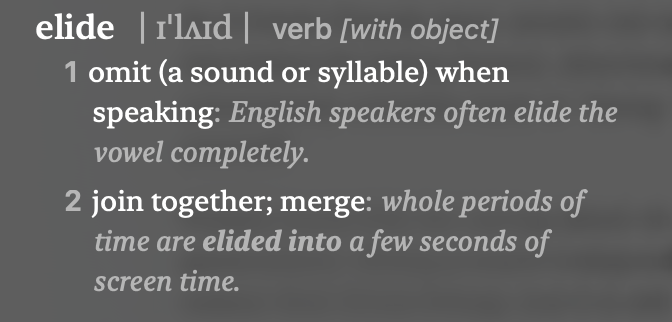
I didn't know what you meant by "elide", but somehow both definitions work!
Denis @ 2026-09-16T20:51 (+19)
I love this post.
When I worked at a multi-national, I learned (too late) a concept called PIE, which was eye-opening.
- P = Performance - this is what you actually do, the contributions you make.
- I = Image - this is how you and your performance are perceived.
- E = Exposure - this is who sees your work.
The point of this was that many of us work on the P only, we assume that the I and E will follow. But often they don't unless we actively manage them. A lot of corporate frustration is about people who focus only on P angriliy complaining about people who get ahead while they don't - and often those who get ahead are people who focus on I and E - but also P.
The trainer's central thesis was this: YOU are responsible for your P, your I and your E. If you focus only on your Performance, don't blame anyone else when you don't get promoted. You need to take ownership for how you are perceived and who perceives you.
Here's where it got interesting. People pushed back: that isn't fair! I focus on doing my job, I do it extremely well, why should "image" matter? Why should exposure matter?
And the response was not what they expected. It was not defensive at all. The trainer said: "That is not true. If you are not focused on image and exposure, you are not doing your job as well as you could be. Because you are not setting an example that people follow. You are not sharing your ideas for others to learn from. You are not Influencing enough.
I sometimes think this is a great concept to share within EA. Because within EA, there are some people who do a fantastic job of getting their ideas out there, about getting talked about, about moving the Overton window. And there are others who also do brilliant work, but much of it stays within the EA community.
And in the end, if we're looking at impact, we have to ask: who has the most impact? Not: who wrote the best articles? Not: who put in the most hours? But the impact.
This week, one guy did more for AI Safety than 1000 people have done in 10 years. He resigned (P), but unlike many before him, he somehow grasped the media moment, came across as a very normal, not nerdy guy, who truly cared about humanity (I). And got the exposure via his posts and major interviews. (E) He's surely not the "best" AI Safety person ever, but he had a huge impact by getting the image and exposure right.
I know there was also a lot that was out of his control, the timing, the background and so on. But it should be an example to us.
Austin @ 2026-09-13T15:44 (+12)
Thank you for writing this, Grace! I'd like to link to another article on this subject, which argues somewhat against your sentiment (while also agreeing in many places): “PR” is corrosive; “reputation” is not
Vasco Grilo🔸 @ 2026-09-16T18:09 (+10)
Hi Grace. I liked the post. Do you have any thoughts on the reputional effects of my posts on soil invertebrates?
This was spurred by Manifund's recent announcement
I assume you are referring to Caroline Ellison joining Manifund. This is the only concrete historical example you mentioned. I wonder if discussing concrete historical examples could help illustrate how you are thinking about various trade-offs. Maybe you could do this without taking a clear position on the decisions that were made (which I guess you would find reputationally risky).
Why Scams Succeed and Cures Fail: Understanding Hype vs. Value. This post is only very tangentially related to yours, but readers may find it relevant.
SofiaBalderson @ 2026-09-20T11:17 (+4)
Thanks for writing this, Grace! I have also noticed that people underestimate how much people talk informally about others, no matter how much power those other people have. For example, if someone was hard to work with, both as an employee and an employer (even in a volunteer capacity), these things will come out eventually via informal channels, and future collaborators/employers will triangulate those thoughts when making a decision about whether to hire you or work for you. You usually won't even know it was said, because people rarely say it to your face. What's more challenging is that people are generally disincentivised to give constructive criticism like this because this may carry social cost.
The more varied the comments about you are from different people, the more confident people will be that they are true, whether good or bad, especially if they come from someone with a strong reputation. Overall, the conclusion is to always do your best work, even in a volunteer capacity; treat people well no matter how much power they have; be easy to work with; and handle challenges with care, knowing others will be interested to hear how you handled it.
Even the smallest interactions matter. For example, I know about an occasion when a person volunteered at a conference for one charity, and they were applying for a job for another, and because of one thing they said to their conference manager, the hiring manager at another charity took this into account and didn't hire them because it wasn't acceptable in their culture. This also applies online, so I encourage people to be careful about what they write and comment publicly because hiring managers and funders usually do deep research before making decisions, and even a small comment can affect whether you advance to the next stage. The rule of thumb is to follow community guidelines at all times: treat everyone with respect, be kind and constructive, open and curious, etc. I love Cate Hall's concept mentioned in her recent book: "You are always auditioning for a bigger role".
Andre Santos 🔸 @ 2026-09-29T07:28 (+2)
Thanks for writing this Grace, I think this is an important point that isn't discussed enough.
I would add that the cost of a bad reputation is, in some cases, actually very visible. I see it when EA-aligned orgs doing political and advocacy work choose to hide (or be discreet about) their EA association. If there was no cost of a bad reputation, they wouldn't go through all that extra work.
Perhaps a point for another discussion, but I wonder if EA will ever have a good reputation?
An org's reputation is sensitive to a single bad event or individual. Most organisations have a top-down hierarchy, and can control their reputation by setting and enforcing norms around how it should be presented in public, and overseeing most decisions that can negatively influence their reputation (such as who to hire). EA doesn't have this top-down control.
And while a bad reputation is often warranted for the org or individual that earned it, the cost doesn't just stay with them, even when the decision isn't representative of the movement. Manifund's hiring decision is an example of a single org unilaterally making a decision that can impact the entire movement's reputation.
So I wonder: if we put a lot of effort into EA's reputation, can that outweigh the occasional very bad decisions?
new_user_2605991309 @ 2026-09-24T01:34 (+2)
Popularity & reputation don't equal impact. We have to be careful about subscribing to “ Eliteism” as elitism is why we’re having a lot of the problems that we are trying to fix in the world. We are ALL worthy. As seen across industries, reputation often tracks bias more than true value. Let's make sure EA measures substance over social standing.
I also enjoyed the EA Summit. It was my first time. A meta-thought: let's replace "Why are you here?" qualification chats to first timers of the summit, with open dialogue, and prioritize measurable impact over social standing or perceived reputation or resume qualifiers
david_reinstein @ 2026-09-22T02:59 (+2)
There's also a big externalities/public goods problem here. Manifund hiring Caroline brings them attention and some benefits, as well as costs. But to the extent that Manifund is seen as representing effective altruism, this adds a reputational burden to the whole movement.
Rick Baker @ 2026-09-18T00:43 (+2)
Thanks for writing this Grace. Both true and important to the flourishing of effective altruism.
JennaS @ 2026-09-13T17:06 (+2)
I do worry that the sense for what does and doesn't matter for reputation, or how much it an action costs, might be miscalibrated? Arguably a lot of damage was done when AI policy and lab people consistently downplayed and softened their view that AI could kill everyone when it came to talking to the investors, government officials, or the public.