We ran the first West Coast EA Retreat (a retrospective)
By Aiden Kim🔸, alexanderu, Jesse Gilbert 🔸, Saul Munn @ 2026-04-29T06:24 (+66)
We (Aiden, Alex, Saul, Jesse) ran the first[1] West Coast EA Retreat, from April 10–12 2026, in Bass Lake, CA. We’re interested in sharing our retrospective with the broader EA community, and in having a public artifact of the retreat — hence this post.
This post was mostly written by Aiden, with substantial input and edits from Alex, Jesse, and Saul (who do not necessarily endorse everything in this post).
Broadly, we ran this retreat for the following reasons:[2]
- Retreats are an extraordinarily good way to motivate people to delve deeper into EA ideas, especially people who have some but not a lot of context on specific cause areas.
- Retreats help people transition to impactful careers by giving them access to relevant professionals that they might not otherwise have had in-network.
- Retreats can be a gateway into broader social integration into the EA community and ecosystem.
Information about the event
Attendance and venue
We held the retreat over a weekend in April in Bass Lake, CA, a three-hour drive east of Berkeley. We initially expected around 30 attendees, but ended up with 63 total attendees (50 university students, 13 non-student special guests). The majority of university students were from either Stanford (19) or UC Berkeley (16), with smaller numbers from UCLA (9), SDSU (2), UCI (1), UCD (1), UChicago (1), and Imperial College London (1).
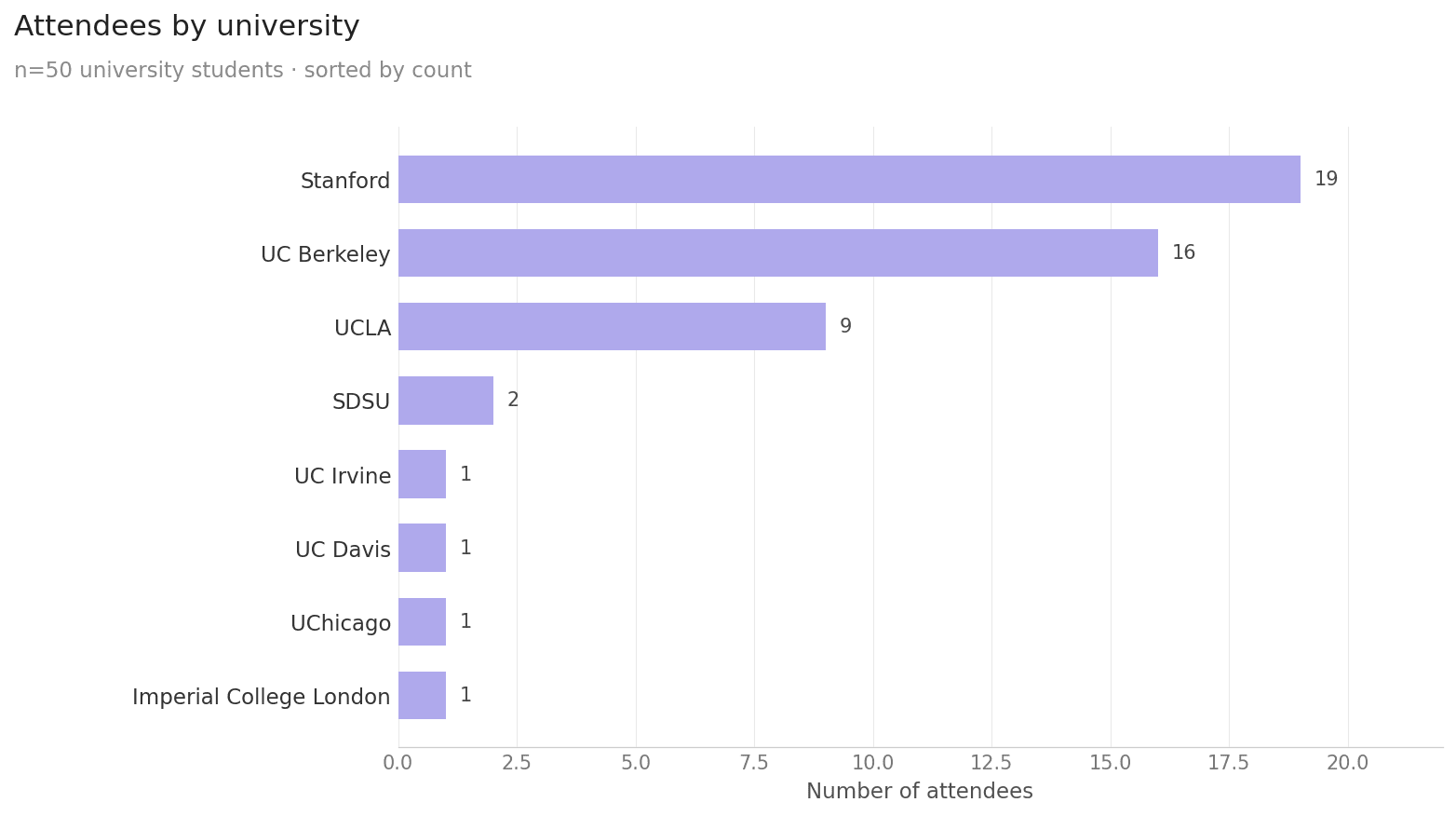
In general, this was a much better turnout than we initially anticipated, and we’re happy that the retreat brought in folks from all over the West Coast, rather than just the Bay Area.
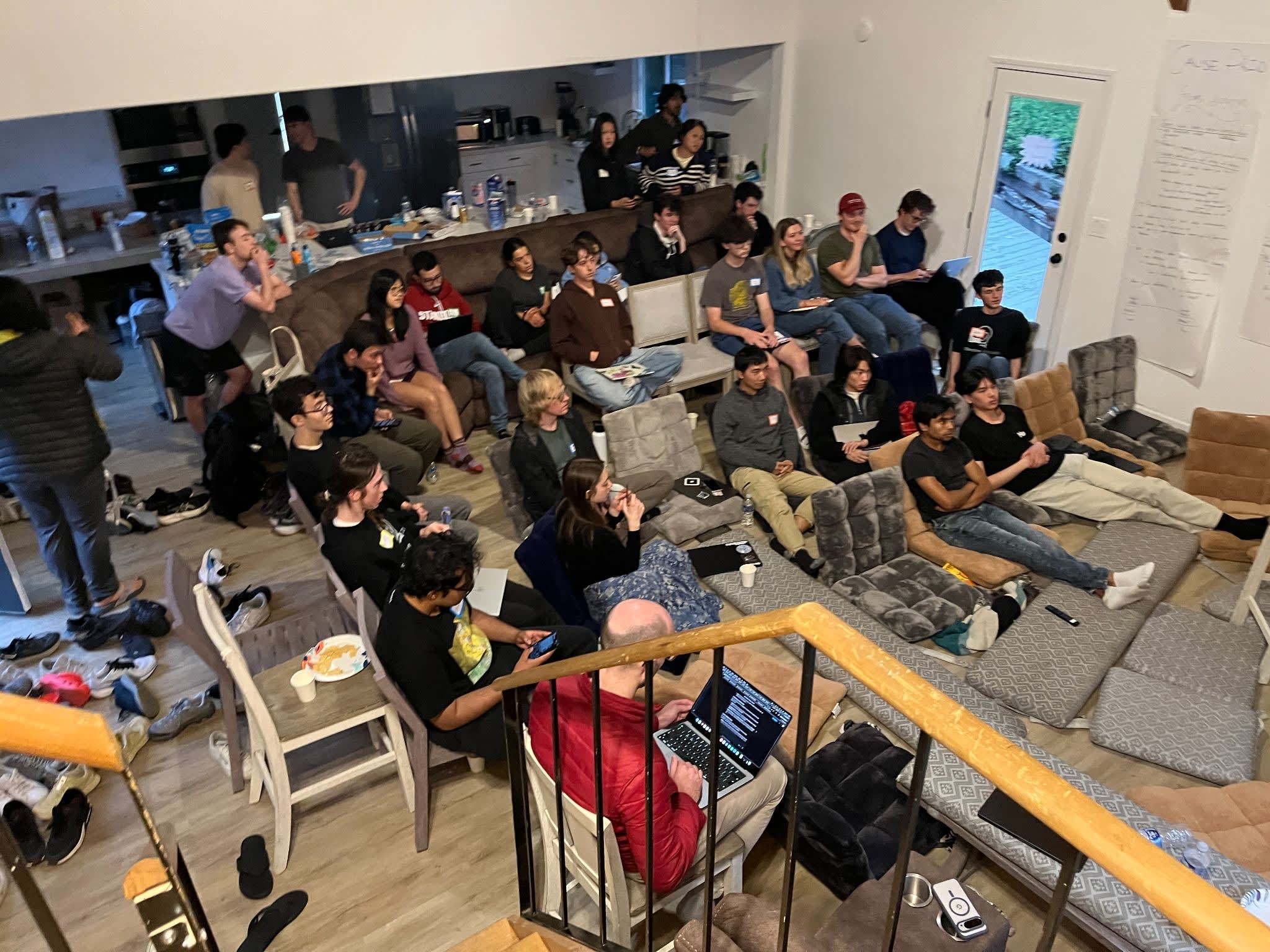
We spent a decent amount of time deliberating over housing options, and ended up choosing to book three Airbnbs, all relatively co-located. We chose the largest of the three to be the main venue for talks, activities, etc during the retreat.
Budget
The cost of the retreat was around $15k in total. You can see our detailed budgetary breakdown here. The vast majority of our spending was housing, followed by catering, and then various discretionary costs (e.g, buying breakfast materials or toiletries).
We were given a one-time grant of $13k from the Center for Effective Altruism to cover the cost of the retreat.
Organizers
Our organizing team was:
- Aiden Kim (Researcher, Center for AI Safety[3])
- Alex (Organizer, UC Berkeley EA)
- Jesse Gilbert (Founding Generalist at Kairos)
- Saul Munn
If you’d like to reach out to any of us, please feel free to do so!
Schedule
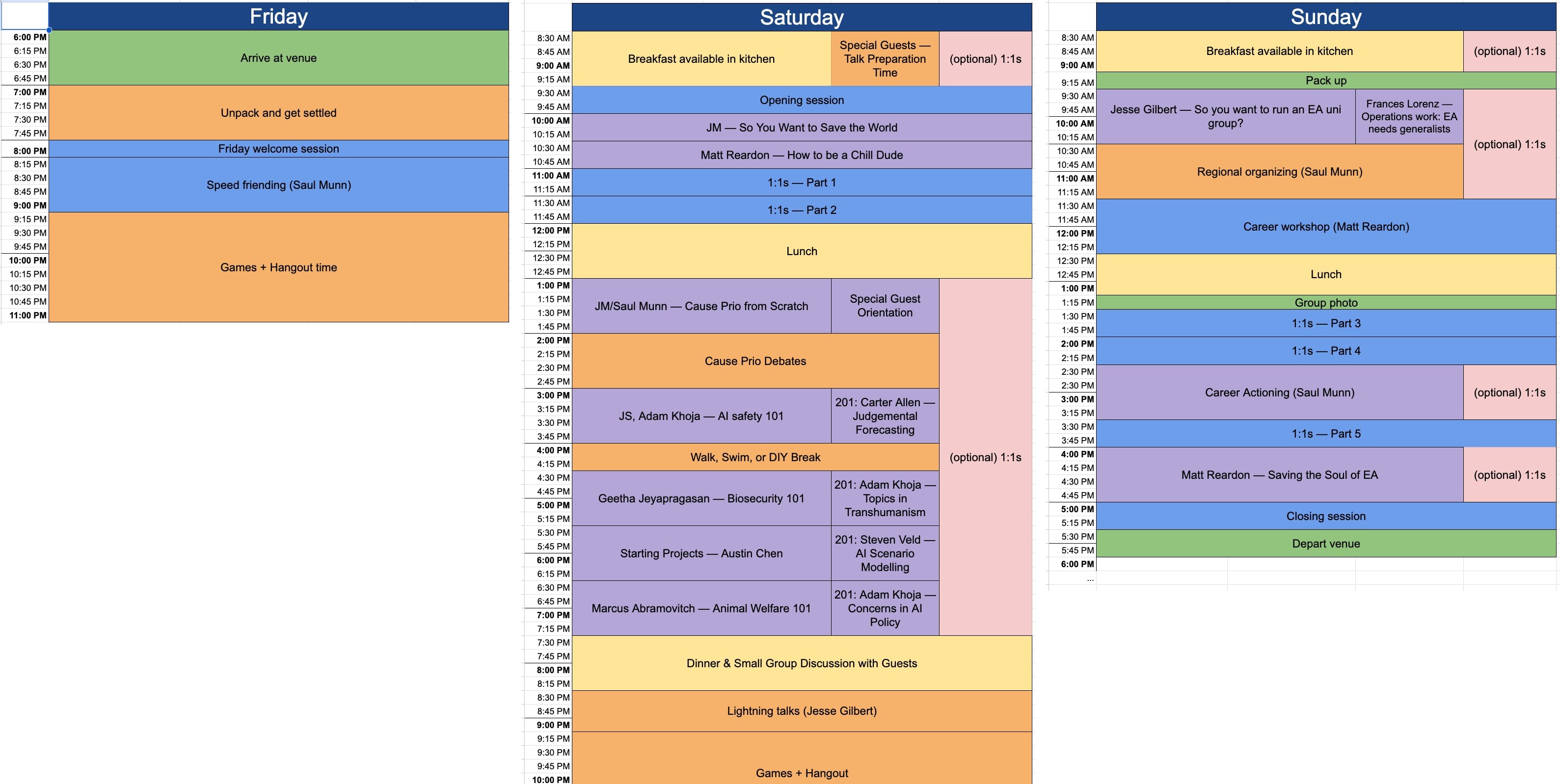
You can see our full schedule here.
Feedback form results & analysis
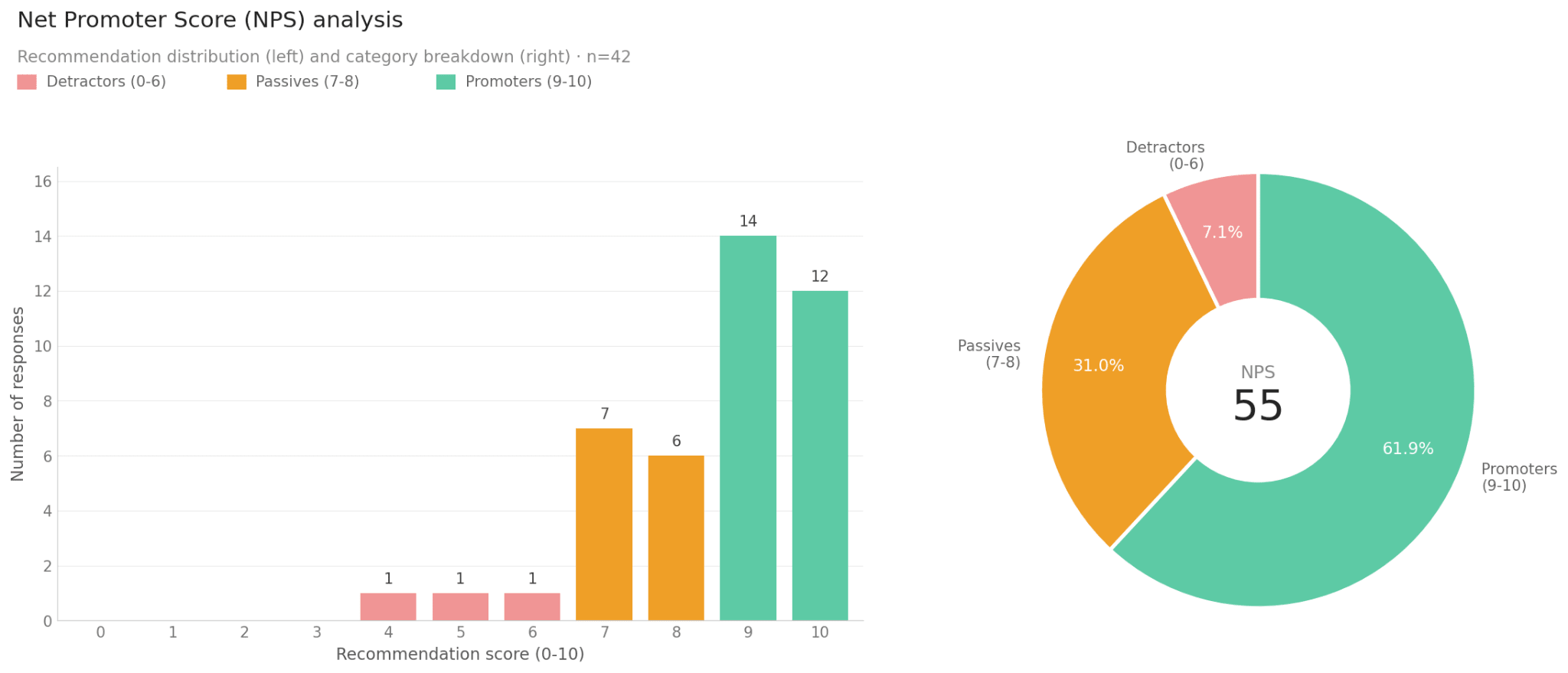
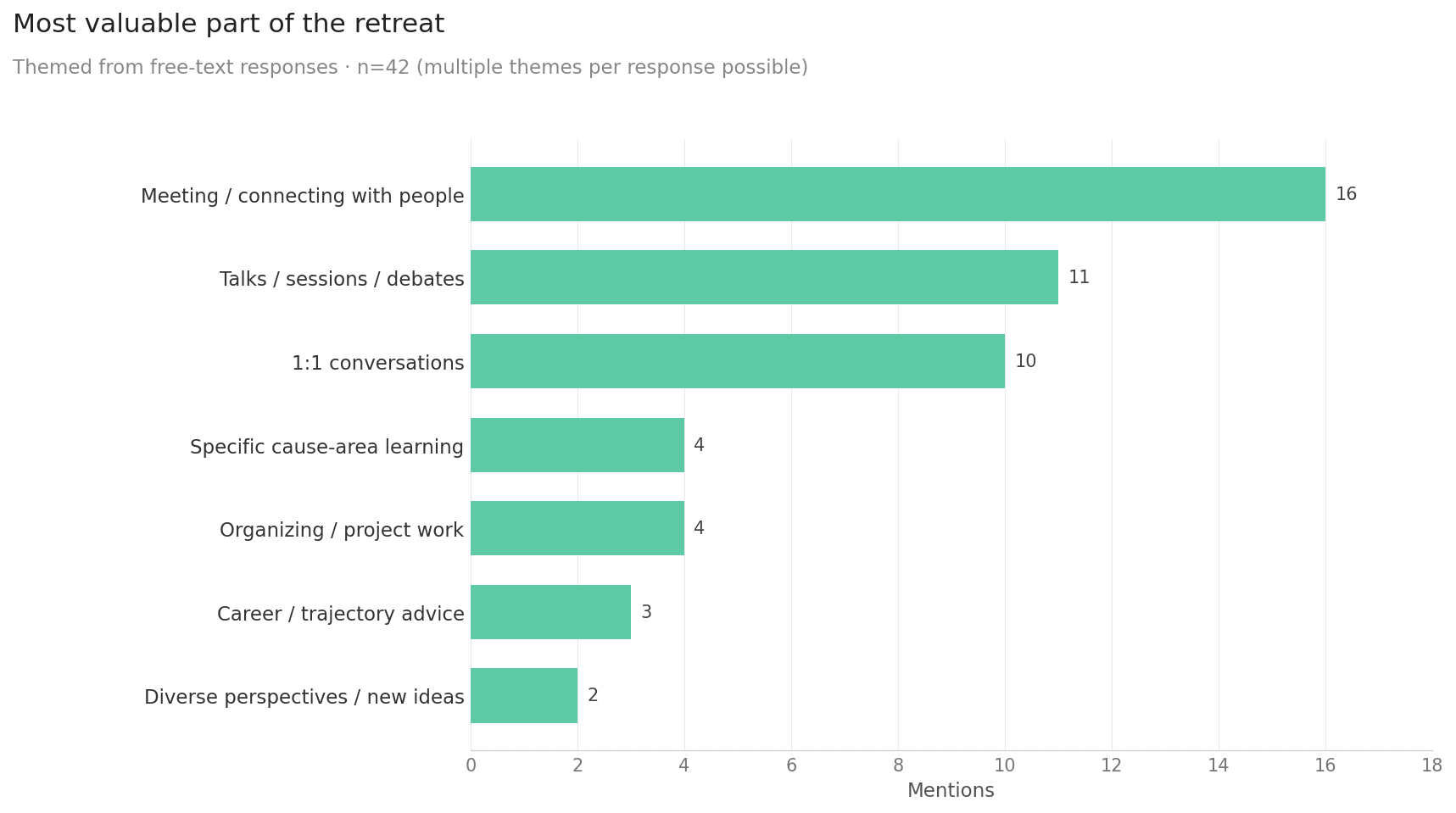
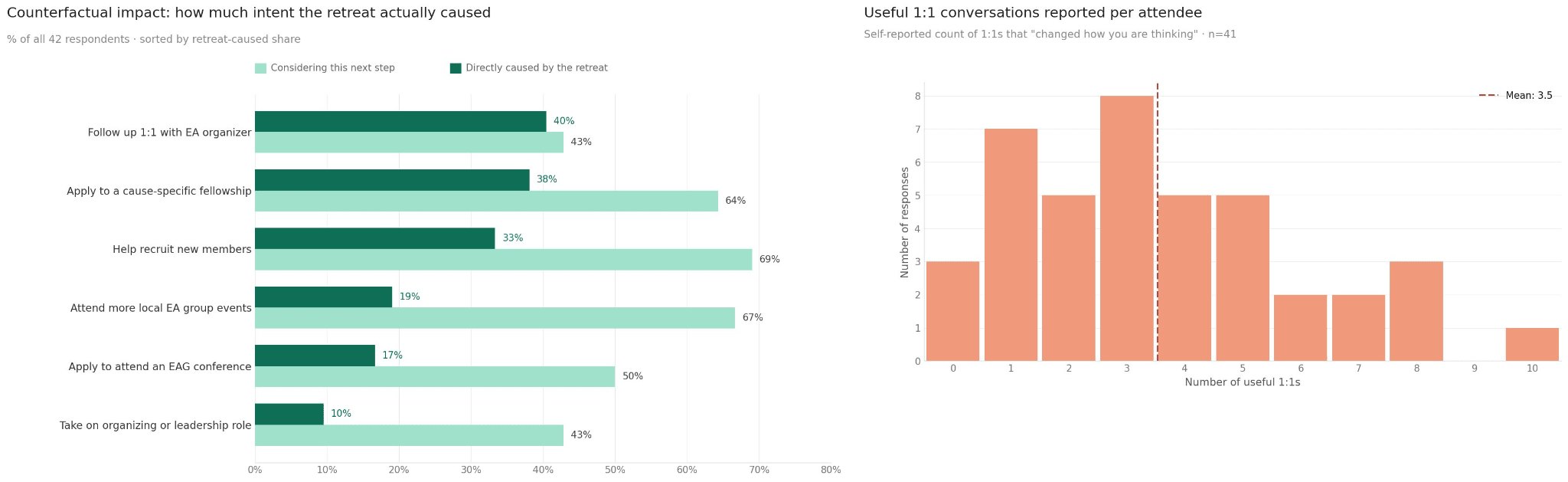
We had two feedback forms: one that CEA asked us to have participants fill out (n=43), and one that had a few questions we were interested in that weren’t covered by the CEA form (n=39). The following graphs & analysis come from both. Also, note that these were generated by Claude, and not hand-checked.
What went well
Overall, we think the event went very well. Organizing a structured retreat for 63 people is a complex logistical endeavour, and the fact that nothing went horribly wrong (e.g, nobody broke their leg, had nowhere to sleep, etc) is deeply positive.
Beyond our basic assessment that the retreat was organized without too many major logistical failures, there are some specific practices that stood out to us as positives.
Parallel talks
Instead of having serial introductory talks like past university EA retreats, we opted for a “101” introductory talk series and a “201” advanced talk series within each time slot.
We think this approach was successful at incorporating content that was interesting for higher-context individuals, while also being educational for people who were newer to EA. It’s unclear whether this structure should be replicated at other university retreats, as one of the primary drivers of our content strategy was a somewhat bimodal distribution of high-context and lower-context people.
Debates
In lieu of participant debates (which we initially planned for, but realized were less logistically viable with a high number of attendees), we had two structured, formal debates between special guests on EA relevant topics:
- Marcus Abramovitch and Adam Khoja on the usefulness of forecasting
- Matt Reardon and [anonymous guest] on prioritizing AI safety in community-building
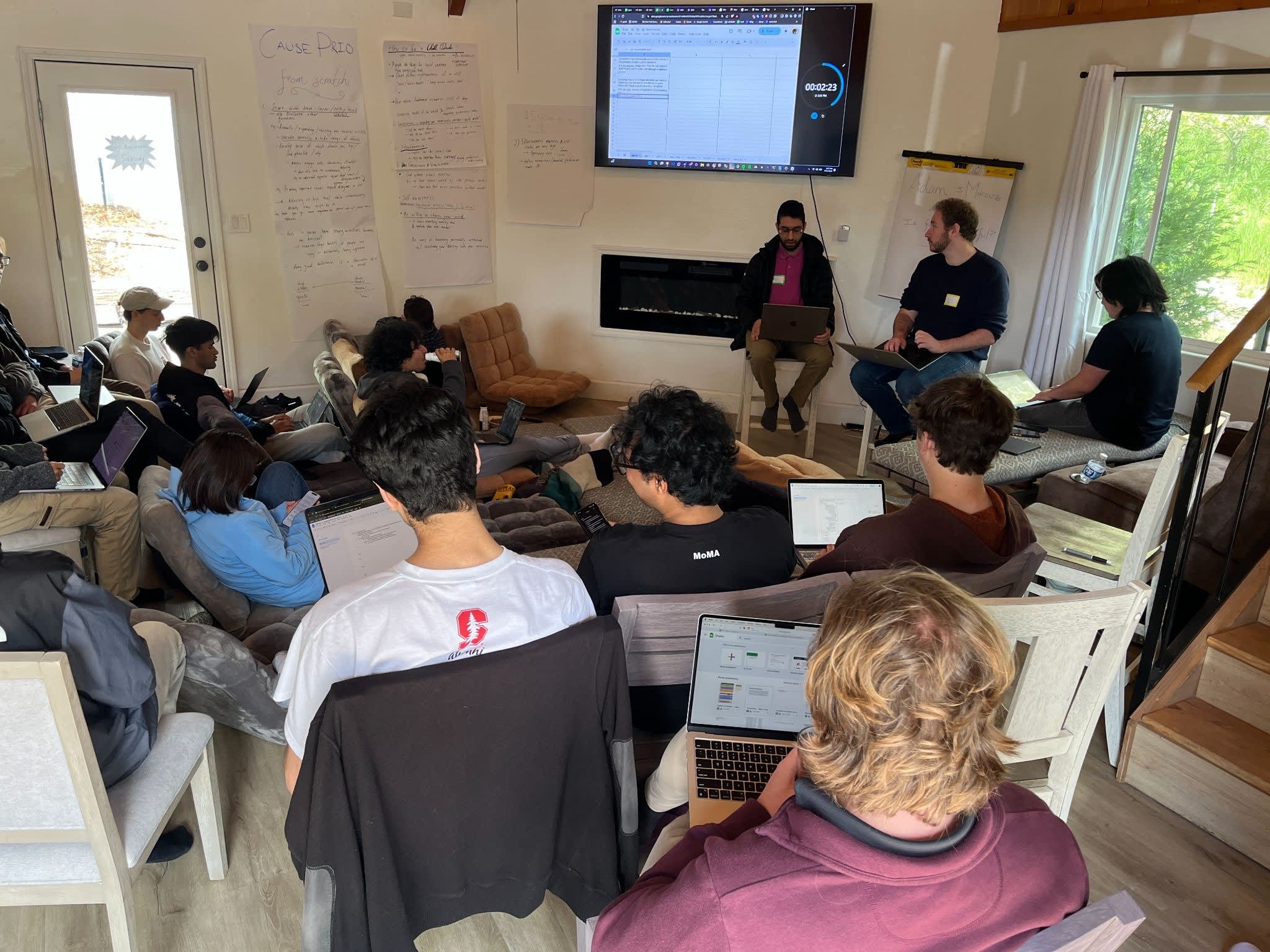
Each debate was timed, moderated, and about an hour long in total. Inspired by two of the organizers’ experiences in high school debate, we opted to have participants vote for a winner and submit detailed written comments on which ideas they found more persuasive.
We think this exercise was useful as a means of demonstrating that cause prioritization is usually not one-sided, and that there are often thoughtful and deliberate arguments to be made on both sides of the issue. We also think that this sort of argument-evaluation exercise can help newer EAs start grokking the logic of cause prioritization in general.
Special guests
A consistent piece of feedback was that our special guests were excellent! In part, this is likely because of our proximity to Berkeley/SF; it was relatively easy for us to source interesting, sociable, and accomplished EAs who were interested in coming. Especially after talking with the organizers of the Midwest retreat, we realized that this might be harder to replicate for retreats in other regions. However, we’re open to referring you to some of our special guests, and other relevant people!
A new one-on-one scheduling app, Pairwise
One problem we identified with running retreats is the persistent need for one-on-one scheduling software that is simpler & cheaper than Swapcard but better than ad hoc solutions like a Google Sheet or random matching (which some university organizers previously used).
Because of how valuable one-on-ones are at retreats like this, we decided to solve this problem by vibecoding a lightweight 1-on-1 booking app specifically for retreats, which we are calling Pairwise. We trialed the platform at both the Midwest and West Coast retreats and, despite some initial hiccups, it ended up working quite well! There were over 300 one-on-ones scheduled on Pairwise across the two retreats, averaging 5 per person, with some people scheduling over 20!!
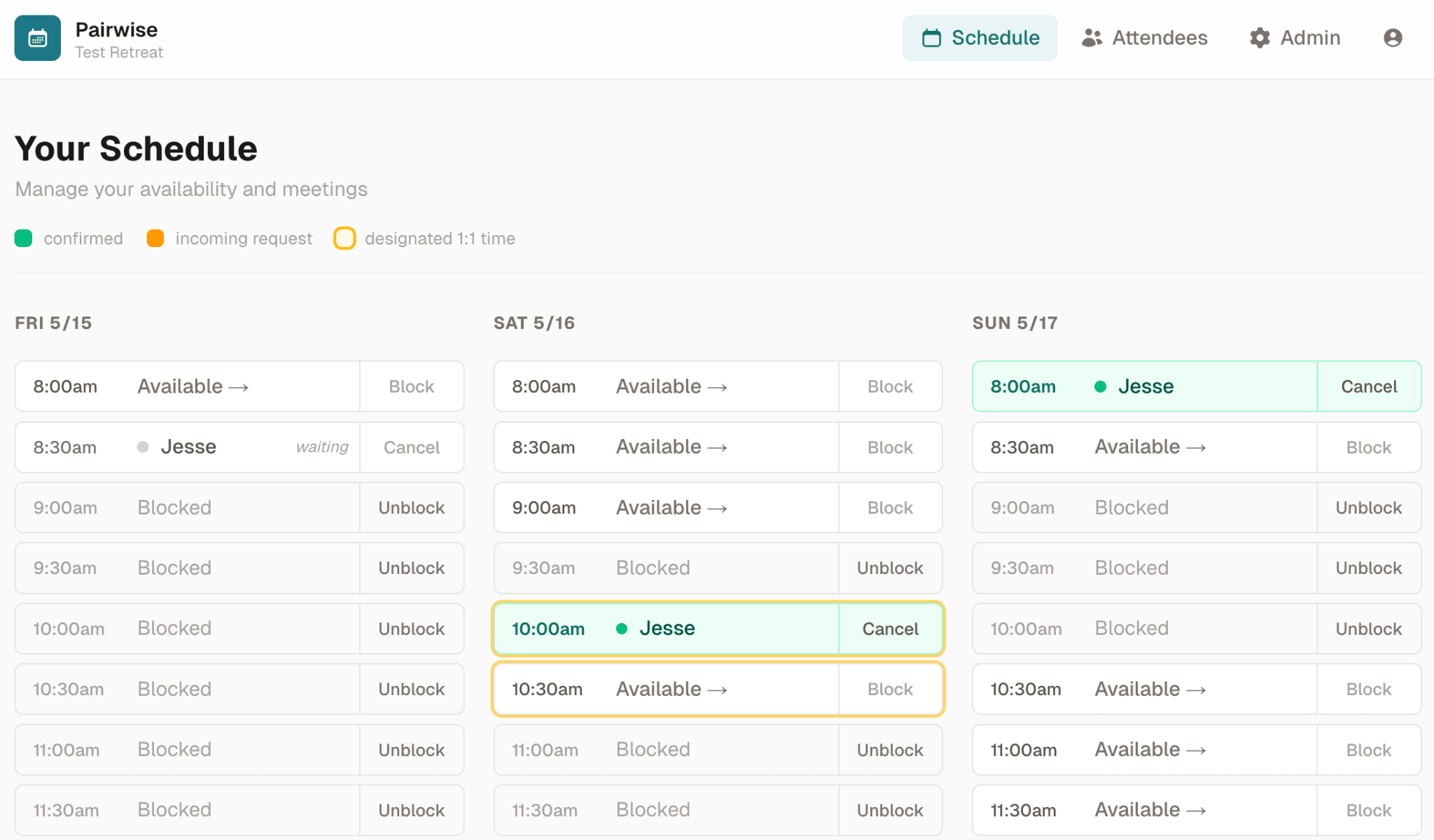
Most of the credit for Pairwise goes to Jesse Gilbert, some to Saul Munn, and the rest to great feedback from lots of folks. If you’re interested in using Pairwise for a retreat, contact Jesse.
What could have been improved
Schedule
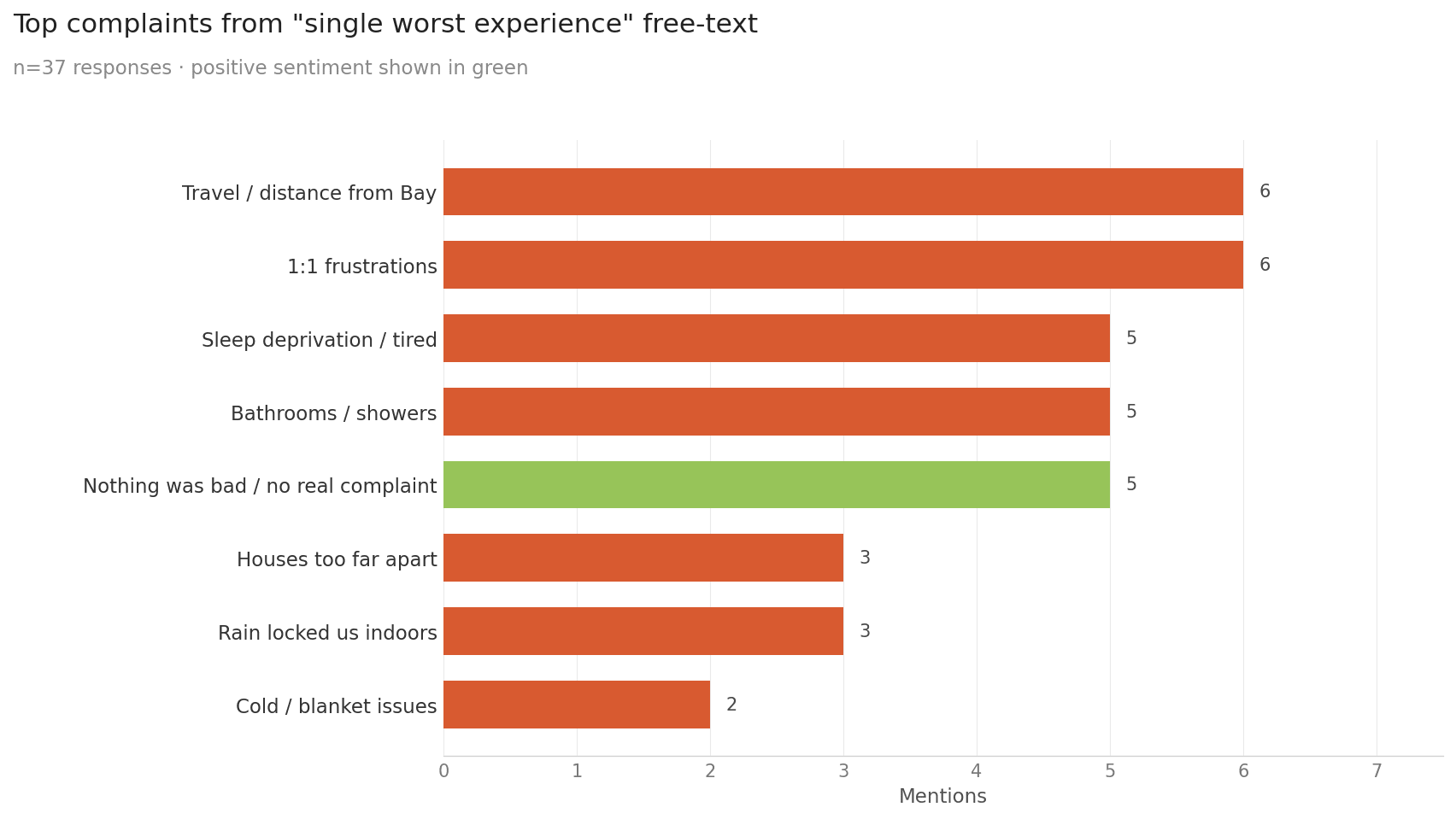
A consistent complaint was that the retreat schedule was too tiring, too long, and too structured. This is a concern we sympathize with! In retrospect, having 7 hours of consecutive lectures with only a 30 minute break in the middle was probably not helpful for people’s stamina or their ability to engage with content.
Besides having more break time in general, we think it might have been valuable to include more unstructured social activities (like games, hikes, etc) throughout the day. Although we did allocate significant time here throughout the evening, many participants were too tired after 7 hours of talks and intellectual content to engage fully.
In the future, we recommend integrating big breaks between lectures, having far fewer lectures in total (at least relative to more interactive intellectual activities, like debates), and having social activities earlier in the day.
Attendees
We spent a lot of time optimizing for the total number of participants (as opposed to ensuring that most of them had at least moderate familiarity with EA). In retrospect, this was a mistake. Although everyone had at least a cursory understanding of EA, lower-context attendees still sometimes had a negative impact on the quality of other attendees’ experiences. That is, even one especially low-context attendee can potentially have an outsized impact on others’ experiences during talks, one-on-ones, etc. Our experience thus suggests that it’s worth optimizing quite hard for a fairly high bar of participant vibe and quality with a very low rate of false positives. This may look like creating “defense in depth” (e.g, multiple organizer interviews, or an application + interview).
Venue
Another consistent complaint was that the venue for the retreat was way, way too far outside of the Bay Area. We agree! Not only did the 3h+ driving distance essentially wipe out any chance of social interaction on Friday night, but it also made it quite difficult logistically to transport chairs, food, etc to the retreat itself. A substantial amount of organizer time was spent planning out how precisely to do this. In addition, the distance prevented some students & special guests from joining for ~half the retreat.
In addition, we think the retreat's scenic, remote location ultimately did not add much value to the experience, especially given that we planned for participants to spend the vast majority of their time on programming — and because it ended up raining throughout the weekend.
At the same time, there are benefits to a venue with at least some removal from urban surroundings. One failure mode we were particularly concerned about was participants commuting to the retreat instead of opting to stay overnight. The sweet spot here is probably something like selecting a location that is above average for the Bay Area on the parameters of rural and scenic, but not extraordinarily so. Such a location would ideally be around a ~1hr drive outside of Berkeley.
Planning and meta-organization
Planning the retreat was a lot messier than it needed to be. Some relatively important concerns were brought up, dropped, and then came up later in different contexts (or not at all). For example, although getting event insurance was initially flagged as high-priority, we ended up not getting it at all after some false starts.
The way we solved this towards the end of the planning process was recording all our meetings (e.g., with the voice memo app) and transcribing them with AI tools before having Claude Code parse the transcript for to-dos. This was pretty effective (we think) at preventing various concerns from dropping out of context, if they could not be immediately addressed.
Other logistical issues
- We almost didn’t have enough food for everyone present on Saturday night, due to a misestimation of the necessary quantity of catering
- We (the organizers) were quite sleep-deprived during the retreat, and suffered in terms of QoL as a result. This probably caused us to make some mistakes that we wouldn’t have made on great sleep.
- Many attendees reported low-quality sleep. We’d recommend optimizing for a higher bed:attendee ratio, and getting extra air mattresses and blankets to make up for any gaps in the sleeping situation.
- Pairwise had a few bugs (that were later resolved) which made some 1-1s annoying to book.
- We could’ve informed the attendees of more logistical information beforehand (such as food being served, and the end time of the retreat), and done so earlier. This would’ve been easier had we planned these things a few weeks earlier than we did.
A few general lessons
We think there are some useful general lessons to draw from our experience running the West Coast retreat that aren’t necessarily tied to any specific problem or positive outcome:
- Optimize for special guests who impart a good vibe, rather than famous or influential people. (Very grateful to all our special guests here — their vibes were immaculate!)
- Organizer time during the retreat is scarce and valuable. In many cases, it’s worth the effort to do things beforehand rather than sacrifice availability during the retreat itself.
- Organizer quality of life is important, both instrumentally toward improving the retreat, and more terminally — so it’s something you should actively prepare for.
- It’s hard to get attendees to do things en masse — like opening a laptop, writing down next steps, et cetera. It’s easier when either speaking to them on a more personal basis, or encapsulating them into a structured setting.
- Vibecrafting — optimizing for a positive and engaging social atmosphere — is really important to be conscious of as an organizer. That includes things like:
- Ensuring that there is good lighting and seating
- Keeping track of where people are, and ensuring that there is an appropriate mix of lower and higher context people in each conversation
- Being confident yet lighthearted while interacting with attendees
- Identifying and preempting bottlenecks - like having everyone squeeze into a small hallway to get food
There is a surprisingly large effect size to just keeping this in the back of your mind while running a big event!
- Understanding that some things will probably get dropped by default during the planning process, and creating defense in depth, is extremely helpful. That includes things like recording meetings and running them through Claude, etc.
- Running events like this is really fun!! Some of us expected this, some of us didn’t
For the majority of the organizing team, this was our first time running a large event, and having some of this otherwise tacit knowledge beforehand would have been extremely useful. Hopefully this is helpful for future organizers!
Other things we learned
Aiden: This was my first time organizing an event of this kind! Learned some things about how to work crowds, etc. Most of my other thoughts are implicitly encapsulated in this post.
Alex: I spent more time planning this retreat than I had anticipated (planning fallacy!) and I really enjoyed the entire process! I learned a lot of object-level and tacit knowledge related to planning & running big events.
Jesse: I really enjoyed running this retreat! It wasn’t my initial intention to be so involved, but I really liked working with Saul, Alex, and Aiden and doing the various problem-solving and rigorous planning the retreat required. I also thought it was a pretty impactful use of my time.
Saul: This was my first time closely advising folks for months-long (vs days- or weeks-long) projects. For this project in particular, it was super useful to have tighter & lower-stakes feedback loops than most scenarios in which one might learn management. I think I improved my capacities here quite a bit!
Conclusion
We think that running retreats is really fun and potentially really impactful. We’re excited to see others run them in the future and think that this was a valuable experience for all involved.
Please feel free to reach out if you have any questions or are interested in organizing a retreat for your university group — we would love to chat!
Book time with us: Aiden, Alex, Jesse, Saul
Thank yous
We planned this retreat, but couldn’t have done it without the help of so many others:
- Kennan McClung, who advised us from CEA (and helped us through the funding process with CEA)
- Matt Reardon & Noah Birnbaum, who spent many more hours than they needed giving us advice & feedback throughout the planning and execution process
- Club organizers, who helped rally their troops to coordinate on getting all sixty three attendees three hours out to the retreat — especially (but not exclusively): Steven Veld, Matthew Day, and Emma Vidal (UCLA); Ahmad Dagher, Jackson Orr, Avi Parrack, and Dillon Nguyen (Stanford)
- Carolanne Jiang, for stepping up to the plate to become a spare firefighter as our need for ops capacity grew during the event
- All of the volunteers we enlisted throughout the event to help us get stuff done quickly
- All of our special guests, for chatting with folks, giving talks, leading discussions, and generally bringing top-shelf vibes
- …and anyone else we forgot to list here :)
Other resources
- Midwest EA retreat postmortem [will edit this post with a link once it’s up]
- The EA Retreat Handbook [will edit this post with a link once it’s up]
- Why You Should Become a University Group Organizer — EA Forum
- ^
To our knowledge
- ^
Simultaneously, some reasons why you might not want to run a retreat:
- Your potential attendees are too new, and people lack the baseline knowledge necessary to engage with deeper EA ideas
- Your group is too small to fill out participants for a good retreat
- Retreats are costly, both financially and time-wise
- Nobody in your group is a sufficiently experienced organizer to run a retreat well
- ^
Neither this post nor the West Coast EA retreat was endorsed or funded by the Center for AI Safety, and all opinions expressed here are my own.
Contrarian^2 = I 🔸 @ 2026-04-29T22:08 (+4)
Thank you all for organizing! I enjoyed this retreat a lot. I can second higher bed to attendee ratio
Tristan Katz @ 2026-04-29T20:20 (+1)
Thanks for this post!
I'm not aware of the American context, are there city-specific retreats? Or is there a California retreat, an Orgegon retreat, etc?
I was quite surprised to hear you say you want to filter people more in the future, even "multiple organizer interviews, or an application + interview". I've been to more retreats than I can count (outside the US) and have never had an interview. Don't you want to use the retreat as an opportunity to get new people involved and enthusiastic about EA? I would have thought that's a much bigger value add than slightly better networking opportunities for people who are already deep into EA.
Saul Munn @ 2026-04-29T22:56 (+3)
hey, thanks for commenting!
this was a retreat for west coast ea uni students — we focused on LA & Bay Area schools, but would’ve been happy to have e.g. oregon schools there too.
re: filtering, our main reflection here was that, given an existing pool of high-context folks, retreats can be a useful way for those folks to coordinate & get to know each other better in ways that are hard to replicate elsewhere. and although it’s possible to use retreats to help newcomers get acquainted to EA, we thought other pathways (intro fellowships, 1:1s with organizers, reading intro material online, etc) would be more effective/scalable for newcomers, while avoiding the problem of making the whole ambient atmosphere lower context.
so — we definitely don’t think all retreats should filter out newcomers, just that retreats which do some filtering will be able to provide benefits to attendees that retreats which don’t do filtering won’t be able to provide.
maybe a relevant analogy here is EAGs vs EAGx’s: the former has a higher bar, but both are super useful at what they’re aiming for.