America’s path to breaking off China’s critical minerals chokepoint
By Anna Lewis @ 2026-02-25T18:03 (+1)
How the new US initiatives of building international coalitions around PRC’s critical minerals monopoly can impact US industries and the AI race between the two countries, and what challenges can hinder their implementation.
The challenge
Last year, in a trade standoff with the new Trump administration, during which the US imposed exorbitant tariffs on China and banned the sales of NVIDIA’s H20 chips, the People’s Republic of China (PRC) placed gradual export restrictions on rare earth elements (REEs). That tit-for-tat led to a halt of US automobile production lines and jeopardized its defense supply chains, revealing the extent of vulnerability of American military complex, auto industry, tech sector, and its AI compute supply chain to China’s critical minerals dominance. In October 2025, Presidents Donald Trump and Xi Jinping met in person to deescalate the tensions. Chinese president agreed to pause the export restrictions on rare earth minerals for a year, while his American counterpart eased off the tariffs and expressed his willingness to permit sales of advanced AI chips to Beijing (he followed through by allowing sales of NVIDIA’s H200 chips, that are more capable than H20). Although China and the US have reached a temporary truce in their chokepoint race, both presidents have also been taking measures to minimize mutual dependencies. China is focusing on the indigenization of its AI chip production and scouting for new trade partners. Meanwhile, America is diversifying its supply chain of critical minerals.
Several months ago the US Department of Interior and Geological Survey have updated the list of critical minerals (Figure 1) that are crucial for every aspect of our digitized life, economy and national security. They are used in consumer electronics, EV batteries, and military equipment. Rare earth elements (REEs), a set of 17 elements from the periodic table, are used in production of high performance magnets, rechargeable batteries, LED screens, and computer components. Although they are called “rare”, they are not hard to find, but they require extremely complex refining to be separated from other minerals to get to the necessary level of purity.
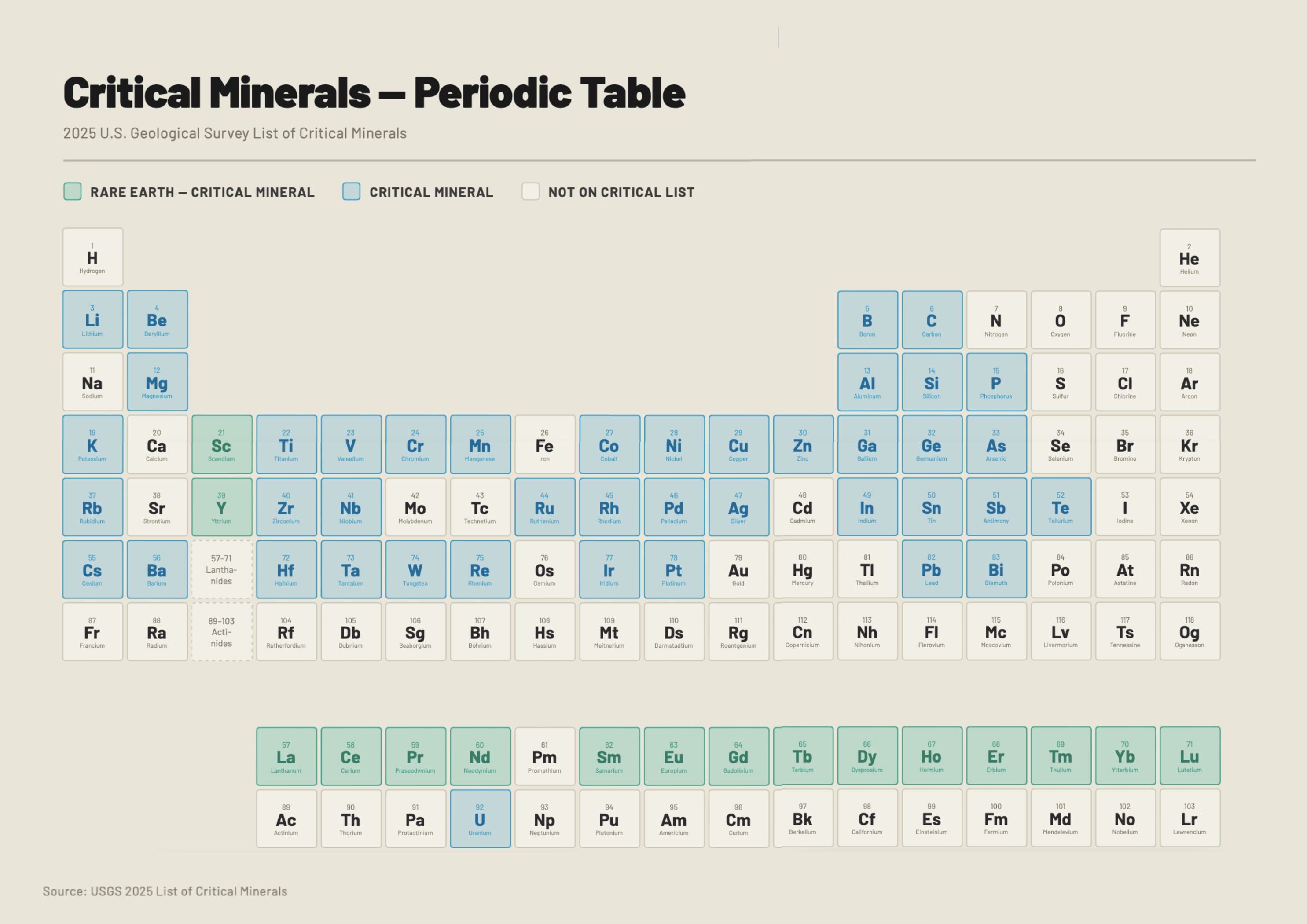
Figure 1. Minerals assigned as critical by the US Department of Interior.*
Source: US Geological Survey
* The USGS critical minerals list is applied to the Periodic Table by using Claude.ai. Barite is presented on the table as barium, metallurgical coal as carbon, phosphate as phosphorus, and potash as potassium. Fluorspar (CaF2) is not reflected on this table.
Critical minerals and rare earth elements are also essential for AI compute infrastructure. They are used in semiconductors, AI servers, cooling systems, fiber optic cables, uninterrupted power supply (UPS) batteries, and broader energy infrastructure (see Figure 2).
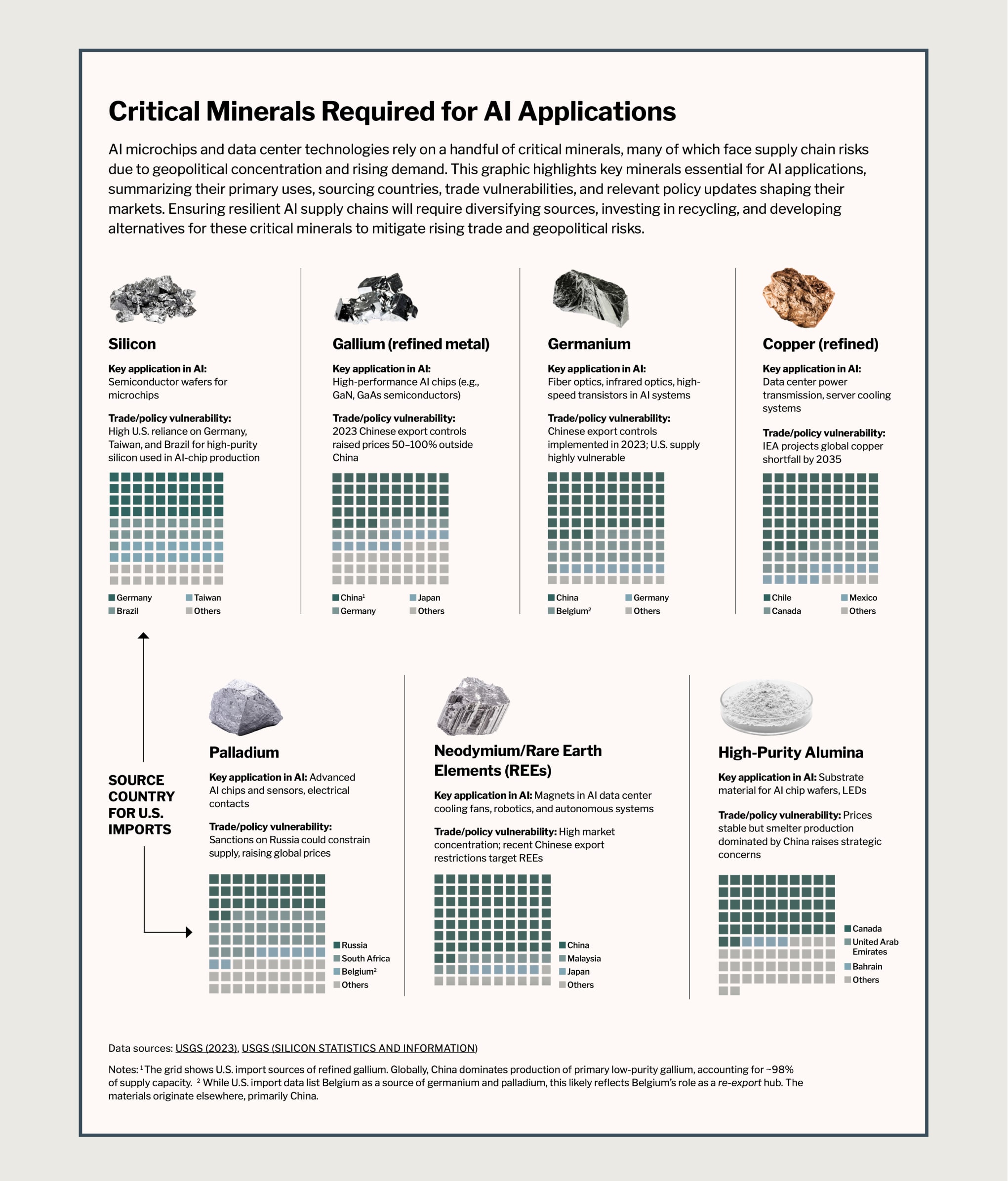
Figure 2. Critical minerals required for AI applications.
Source: FP Analytics and JCDREAM
Although the mining of many of critical materials and rare earth elements is scattered around the world, China dominates their processing. It controls production of around 76% of silicon, 99% of gallium, 53% of copper and 90% of global rare earth elements. For over a decade the PRC government has been building ties and investing into mines in Africa, Asia and South America. The United States, on the other hand, significantly relies on the import of critical minerals and like many other countries, is highly dependent on China’s supply.
America’s path to breaking free of China’s critical minerals chokepoint may be an arduous one, as the US faces many challenges:
- For starters, not all of 60 minerals deemed critical can be sourced in America,
- Even if they were, those minerals need to be refined, and China controls around 90% of global mineral processing capacity,
- For America to build processing facilities in the US, it needs to:
- streamline permitting, that currently averages between 7 and 10 years, without damaging the environment,
- make the operations profitable, as China can leverage its monopolist position to dump critical mineral prices, and
- solve domestic energy problem required in large volumes for processing facilities, a problem that is exacerbated by the existing, yet unsolved, enormous energy demand for AI datacenters.
- The United States can hardly solve this problem alone and needs the support of its allies, many of whom have become alienated due to Trump’s tariff policy, ideological differences and geopolitical disagreements.
The initiatives
In 2025 critical minerals, that had previously been a niche topic in Washington D.C., became a national security priority and were thrust into the focus of policymakers. Both the Executive Branch and the Legislative Branch have released a number of initiatives targeting on-shoring the processing of critical minerals and addressing tangential areas, such as energy, environment and AI stack supply chain.
One of the consequential initiatives was the One Big Beautiful Bill that passed on July 4, 2025, and endowed $7.5 billion to the Pentagon for critical minerals projects, of which $2 billion were allocated for stockpiles of critical minerals, $5 billion for investments and $500 million for loans through Department of Defense’s (later renamed to Department of War) Office of Strategic Capital (OSC) for mining, refining and process innovation projects.
Those funds enabled the DoD to sign a week later an unprecedented public-private partnership with MP Materials, that operates the only active rare earth mine in the US, for the latter to expand its REE mining and processing capabilities, and to build a new facility for magnet manufacturing. The DoD purchased 50% of company’s equity for $400 million and lent $150 million through OSC, while JPMorgan Chase and Goldman Sachs provided additional $1 billion financing. As part of the deal, the DoD committed to ensure for 10 years that all the magnets produced by MP Materials are purchased by either defense sector or commercial clients for a price not less than $110 per kilogram of NdPr, a rare earth oxide used in high performance magnets for wind turbines and EV motors. On one hand, the deal made the DoD the largest shareholder of MP Materials, on the other it addressed the main challenges that US critical minerals companies face in competition with China. Namely, the deal:
- established a price floor, safeguarding MP Materials from price dumping that would make a purely commercial enterprise unfeasible,
- provided patient capital to avoid death valleys (shortage of finance for projects that take long time to show meaningful results) caused by traditional venture capital dynamics that require faster exits, and
- guaranteed offtake of produced minerals, by promising a 10 year purchase commitment by the defense sector.
Throughout the year, the DoD signed deals with many other projects across the spectrum of critical minerals exploration, mining, refining and magnet production.
The Department of Energy was also given funds to support critical minerals and battery supply chain projects through loans and other financial instruments that amounted to over $8 billion. Of which $4.7 billion went to lithium production projects and almost $1 billion to graphite processing. Some of the funds were also allocated to companies working on recycling of utilized batteries.
Further, the Trump administration has used two public finance institutions, the US International Development Finance Corporation (DFC) and the Export-Import Bank (EXIM), as vehicles for bilateral critical minerals and REE deals with foreign countries, such as Saudi Arabia, the United Arab Emirates (UAE), Kazakhstan, Pakistan, Brazil, Ukraine and Democratic Republic of Congo (DRC).
Most notable projects involving DFC and EXIM are:
- Orion Critical Minerals Consortium, a pubic-private partnership created in October 2025 among DFC, Orion Resource Partners (an alternative investment company from New York), and UAE’s Abu Dhabi sovereign wealth fund. Each participant has committed $600 million, making the fund worth $1.8 billion, as a vehicle to invest into mining and refining projects worldwide. Earlier this month the Consortium signed a memorandum of understanding (MOU) with Glencore, one of the largest commodity producers and traders in the world, for a potential purchase of 40% of Glencore’s copper and cobalt mining assets in DRC.
- Project Vault, a stockpile of critical minerals built by $10 billion financing from EXIM and $2 billion from private investors to weather another potential China’s weaponization of critical minerals supply.
During the Critical Minerals Ministerial that gathered representatives of over 50 countries in Washington, D.C. in early February, Trump administration officials launched the Forum on Resource Geostrategic Engagement (FORGE) that essentially replaced the Biden-era Minerals Security Partnership. FORGE is designed as a plurilateral bloc that unites countries participating in critical minerals supply chain (either by mining, processing, component manufacturing or financing) to align policies and coordinate actions to reduce global critical minerals dependence from China.
More relevant for the AI stack, in December 2025 the United States launched Pax Silica, a framework designed to connect countries critical to the semiconductor supply chain into an economic, technological and security ecosystem. The initial list of participants, who appeared as signatories and “guest contributors” included a dozen countries, among which were:
- South Korea, a home to Samsung and SK Hynix, key producers of high bandwidth memory for AI chips,
- the Netherlands, whose ASML, a company that creates extreme ultraviolet lithography equipment crucial for manufacturing advanced AI chips, is the only one that can produce them,
- Japan, that dominates the global supply of ultra-high-purity materials used in semiconductor manufacturing,
- Australia, that has large reserves of critical minerals used in semiconductors.
Most recently, India has joined Pax Silica, thus contributing its critical minerals mining and processing capacity, as well as its large tech talent, into the US-led AI supply chain coalition.
Combined, all these initiatives signal America’s determination to tackle the critical minerals chokepoint imposed by China. However, their success will largely depend on implementation.
Implementation pitfalls
All the initiatives target the main challenges listed in the first section of this analysis, but for them to work America will need to overcome bureaucratic, ideological and diplomatic hurdles.
- Extreme partisanship. The disagreements between Republicans and Democrats led to the longest government shutdown in modern American history in 2025. Although representatives of both parties agree that the critical minerals issue is a pressing one, important for national security, partisan divisions on other issues can slow down the implementation of critical minerals and tangential initiatives. In the good old days there was a principle that “politics should stop at the water's edge”, meaning that when it came to national security or foreign affairs issues, America presented a united front. Today it’s not the case. Hard it may be, for the critical minerals to succeed, it requires strong bipartisan effort.
- Strong pushback from environmentalists. Mining and processing facilities, as well as additional power stations required to operate them, may pose environmental threat if certain safety and emission control measures are not put in place. Several US environmental groups have already rung alarm bells regarding unsafe practices used to power new AI datacenters. The recent rescission by President Trump of greenhouse emissions rule, loosening limits for automakers, potentially sets a precedent for removal of the guardrails for power plants and may exacerbate both danger to local communities and complaints from them and environmental groups. Thus, when implementing the mining, processing and recycling projects, the US government government should strike a balance between adhering to and enforcing Environmental, Social, and Governance (ESG) standards and the speed of issuing operating permits for new facilities.
- Finding trustworthy partners abroad. During the Critical Minerals Ministerial, the US officials spoke about the importance of finding trustworthy foreign partners. It’s hard to overstate that point, considering that critical minerals are sourced throughout the world, and sometimes found in warring countries with unstable and / or corrupt governments. To minimize risks, the US government should prioritize projects within democratic countries with strong governance and rule of law, so that there are higher standards of safety, transparent permitting processes, lawful mechanisms of accountability and lower probability of a hostile takeover or nationalization if a foreign country’s leadership changes.
- Strained relations with historic allies and existing trade partners. In the decades following the World War II the United States had built a unique set of security alliances and trade coalitions that helped it emerge as dominant economic and military power with unparalleled innovation capacity. Those alliances are America’s critical advantage over China, as the latter’s don’t have the same caliber of economic, industrial and scientific bases.
However, over the last year America’s allies in the EU have been disturbed by the Trump administration’s aggressive stance toward Greenland, ambivalence about US support to Ukraine and the inclusion of ideological alignment with EU’s far-right factions into the 2025 National Security Strategy, which was interpreted as political meddling in the domestic affairs of European countries. On top of that, blanket tariffs alienated trade partners and forced some of them to turn toward China. Now those distanced allies and partners hold keys to America’s critical mineral independence from China. The EU countries produce critical mining equipment, have a strong industrial and R&D base, and maybe most critically, have historic ties to the African continent that holds over 30% of the world’s mineral reserves. Brazil and India, countries that have the second and the third largest rare earth reserves respectively after China, have been as some may see unreasonably tariffed by the Trump administration in 2025, damaging ties with both countries.
Economic coercion can’t help America foster genuine long-term industrial partnerships, especially with large economies. To implement the US critical mineral strategy, both current and future administrations need to curb ideological impulses and exercise prudent diplomacy.
- The US - China interdependence paradox. The United States and China, the two largest world economies, are each other’s top trading partners, and this interdependence is precisely the source of chokepoint leverage. Over the last decade, the leaders of both countries engaged in rival rhetorics, speaking publicly about the need to outdo the other either in economic, AI or world influence races. If taken too far, this rhetoric risks to evolve from an economic competition to an existential ideological standoff between two nuclear powers. The latter would be catastrophic for both countries. Thus, the United States, should strive to find an equilibrium between its effort to minimize dependence on China’s critical minerals supply chain, monitoring China’s military activities in the region, and stabilizing mutual trade in for the benefit of the US economy.
- China’s playbook. The United States enters the critical minerals competition with the playing field already partially shaped by China. A recent paper from the Council on Foreign Relations (CFR) recommends the US not try to “out-mine, out-process, and outspend China,” but disrupt the field entirely, by complementing traditional mining and processing endeavors with heavily investing into innovations that would allow development of equally performing solutions that don’t require as many critical minerals and rare earth elements. The CFR analysis also urges the US to seriously consider recycling electronic and mining waste that authors argue is “cheaper, cleaner and faster to deploy today.”
Conclusion
If 2025 was a year of America’s rude awakening to its outsized dependence from China’s control of global supply chain of critical minerals and REEs, this year is shaping to become a year of governing and diplomacy. Although the US has been able to mobilize parties interested in gaining independence from China’s minerals monopoly, by creating supply chain coalitions and international public-private partnerships, the hardest part is still ahead. Revitalizing mining and processing in the US and guiding foreign partners through hurdles of opening new facilities, while adhering to transparent governance, responsible ESG practices and respectful diplomacy is going to take gargantuan efforts. In parallel, the US and other countries within FORGE and Pax Silica coalitions need to reconcile their trade with China and their countries’ national security priorities, knowing that PRC holds enormous leverage. Thus, the path to America’s independence from China’s critical minerals chokehold requires masterful diplomacy and trade policy.